
Enhancing In-Car Experience: How Automotive Companies Are Innovating Vehicle Interiors to Elevate User Experience and Brand Identity
Introduction:
The automotive industry is experiencing a fundamental shift in how vehicles are designed, marketed, and experienced. While performance, safety, and fuel efficiency remain important considerations, modern consumers increasingly evaluate vehicles based on the quality of the experience they provide inside the cabin. As vehicles become more connected, intelligent, and software-driven, the interior has emerged as a critical differentiator for automotive brands.
Today's vehicle is no longer just a mode of transportation. It is a digital living space, a mobile office, an entertainment hub, and a personalized environment that adapts to individual preferences. Consequently, automotive manufacturers are investing heavily in In-Car User Experience, combining advanced technologies with innovative design principles to create memorable journeys and stronger emotional connections with customers.
From Digital Cockpit Technology and AI-driven personalization to advanced connectivity and intuitive controls, the evolution of vehicle interiors is reshaping consumer expectations and redefining brand identity.
| Also Read: AI-Powered Smart Cockpits: The Future of Personalized In-Car Experiences |
The Growing Importance of In-Car User Experience
Consumer behavior within the automotive market has changed dramatically over the past decade. Buyers are increasingly influenced by the quality of interaction they have with vehicle technologies rather than solely focusing on horsepower or engine specifications.
The rise of smartphones, smart homes, and digital ecosystems has conditioned consumers to expect seamless digital interactions everywhere—including inside their vehicles. As a result, manufacturers are prioritizing In-Car User Experience as a strategic component of vehicle development.
A well-designed cabin influences several key factors:
- Customer satisfaction
- Brand loyalty
- Vehicle usability
- Driver confidence
- Passenger comfort
- Long-term ownership experience
Automakers recognize that a positive in-car experience often becomes one of the strongest reasons customers remain loyal to a particular brand.
Digital Cockpit Technology: The New Centerpiece of Vehicle Interiors
One of the most visible transformations in modern vehicles is the adoption of Digital Cockpit Technology.
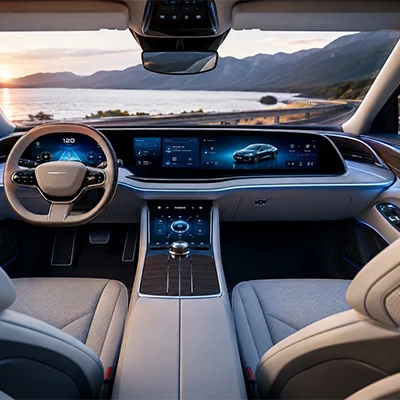
Traditional dashboards with analog gauges are rapidly being replaced by fully digital interfaces that integrate information, entertainment, navigation, and vehicle controls into a unified ecosystem. Large curved displays, configurable instrument clusters, and high-resolution touchscreens have become standard features across premium and increasingly mainstream vehicle segments.
Modern digital cockpits offer several advantages:
Enhanced Information Delivery
Drivers can customize displays to prioritize the information most relevant to their driving conditions. Navigation guidance, energy consumption, vehicle diagnostics, and safety alerts can be presented clearly and contextually.
Reduced Cognitive Load
Advanced interface design minimizes distractions by presenting only necessary information at the appropriate moment. This supports safer driving while improving convenience.
Seamless Connectivity
Digital cockpits serve as the central hub for integrating smartphones, cloud services, navigation platforms, and vehicle management systems.
As digital interfaces become increasingly sophisticated, they play a vital role in shaping both the Connected Car Experience and overall brand perception.
Automotive Interior Design beyond Aesthetics
Historically, Automotive Interior Design focused heavily on material quality, styling, and ergonomics. While these factors remain essential, modern interior design now incorporates technology integration, sustainability, and user interaction.
Today's designers must balance multiple objectives:
- Comfort and functionality
- Technology accessibility
- Visual appeal
- Sustainability goals
- Brand differentiation
Premium brands increasingly use distinctive lighting signatures, unique material combinations, and customized digital themes to reinforce their identity. Meanwhile, emerging electric vehicle manufacturers often embrace minimalist layouts that emphasize spaciousness and simplicity.
The challenge lies in creating interiors that remain intuitive despite increasing technological complexity. Successful designs ensure technology enhances the driving experience without overwhelming users.
Smart Vehicle Interiors Are Becoming Adaptive Spaces
The next evolution of vehicle cabins is represented by Smart Vehicle Interiors that actively respond to occupants and environmental conditions.
These intelligent interiors use sensors, software, and connectivity systems to adjust various settings automatically. Features may include:
- Adaptive climate control
- Occupancy detection
- Intelligent lighting adjustments
- Driver fatigue monitoring
- Automatic seat positioning
- Personalized infotainment preferences
Rather than requiring manual adjustments, smart interiors continuously optimize cabin conditions based on user behavior and preferences.
This adaptive approach contributes significantly to a more comfortable and efficient driving experience while supporting broader goals related to safety and convenience.
Human-Machine Interface (HMI): Simplifying Vehicle Interaction
As vehicles incorporate increasingly sophisticated technologies, the importance of the Human-Machine Interface (HMI) has grown substantially.
HMI refers to the methods through which drivers and passengers interact with vehicle systems. This includes:
- Touchscreens
- Voice controls
- Steering wheel controls
- Gesture recognition
- Augmented reality displays
- Head-up displays
The primary objective of modern HMI development is simplicity.
Consumers should be able to access features quickly without diverting attention from the road. Poor interface design can create frustration and safety concerns, whereas intuitive systems enhance confidence and usability.
Leading manufacturers are investing heavily in user research, behavioral analysis, and interface testing to develop HMIs that feel natural and effortless.
The most effective interfaces often become nearly invisible, allowing users to focus on their journey rather than the technology itself.
AI-Powered Vehicle Interiors Transform Personalization
Artificial intelligence is emerging as one of the most influential drivers of Automotive Interior Innovation.
AI-Powered Vehicle Interiors can learn user habits, anticipate preferences, and deliver increasingly personalized experiences over time.
Examples include:
Intelligent Personal Assistants
AI assistants can manage navigation, climate settings, entertainment systems, and communication functions through conversational voice interactions.
Predictive Comfort Adjustments
Machine learning algorithms can identify preferred seating positions, temperature settings, music selections, and driving routes.
Driver Wellness Monitoring
Advanced AI systems can detect signs of fatigue, distraction, or stress and recommend corrective actions.
Context-Aware Recommendations
Vehicles can proactively suggest charging locations, alternative routes, nearby services, or personalized entertainment options based on real-time circumstances.
By transforming passive systems into proactive assistants, AI helps create a truly Personalized In-Car Experience that evolves alongside user behavior.
Automotive Connectivity Solutions Power the Connected Car Experience
The rise of connected vehicles has fundamentally altered how drivers interact with their cars.
Modern Automotive Connectivity Solutions enable continuous communication between vehicles, cloud platforms, infrastructure, and personal devices.
Key capabilities include:
- Over-the-air software updates
- Remote vehicle monitoring
- Real-time traffic information
- Predictive maintenance alerts
- Smartphone integration
- Connected navigation services
These technologies collectively enhance the Connected Car Experience by extending vehicle functionality beyond the physical cabin.
Connectivity also allows manufacturers to continuously improve vehicle performance and introduce new features throughout the ownership lifecycle. This transforms vehicles from static products into evolving digital platforms.
For automotive brands, connectivity creates ongoing customer engagement opportunities that extend well beyond the point of sale.
User-Centric Vehicle Design Is Shaping Development Strategies
The industry's focus is increasingly shifting toward User-Centric Vehicle Design.
Rather than designing around engineering constraints alone, manufacturers are prioritizing customer needs throughout the development process.
This approach involves:
- Extensive user testing
- Behavioral analysis
- Human factors engineering
- Digital simulation
- Customer feedback integration
User-centric design seeks to understand how people actually interact with vehicles in real-world environments.
For example, engineers evaluate:
- How quickly drivers locate controls
- How passengers access infotainment functions
- How occupants enter and exit the vehicle
- How cabin layouts influence comfort
By placing users at the center of development decisions, manufacturers can deliver more intuitive and satisfying experiences.
Sustainability Meets Automotive Interior Innovation
Sustainability has become a major consideration within Automotive Interior Innovation.
Consumers increasingly expect environmentally responsible products without sacrificing quality or comfort. As a result, automakers are introducing innovative interior materials that reduce environmental impact while maintaining premium aesthetics.
Examples include:
- Recycled plastics
- Bio-based textiles
- Vegan leather alternatives
- Natural fiber composites
- Sustainable wood finishes
Beyond materials, manufacturers are also optimizing production processes and supply chains to reduce emissions associated with interior component manufacturing.
Sustainability is no longer viewed as a compromise but as an opportunity to strengthen brand identity and attract environmentally conscious consumers.
Future Vehicle Interiors and the Autonomous Driving Revolution
The development of autonomous driving technologies is expected to significantly influence Future Vehicle Interiors.
As vehicles gradually assume more driving responsibilities, cabin layouts may evolve from driver-focused environments into flexible living spaces.
Potential developments include:
- Rotating seats
- Modular cabin configurations
- Immersive entertainment systems
- Productivity-focused workspaces
- Enhanced social interaction zones
Future interiors will likely prioritize comfort, collaboration, and digital engagement rather than traditional driving controls.
Automotive companies are already experimenting with concept vehicles that demonstrate how autonomous mobility could transform the passenger experience.
These innovations represent an important step toward the broader Next-Generation Mobility Experience, where transportation becomes more personalized, connected, and service-oriented.
Brand Identity through Interior Experience
Vehicle interiors increasingly serve as an extension of brand identity.
Every element—from interface design and lighting signatures to material choices and digital services—contributes to how customers perceive a brand.
Luxury manufacturers emphasize craftsmanship and exclusivity
.
Technology-focused brands highlight digital innovation and connectivity.
Performance-oriented companies prioritize driver engagement and dynamic interfaces.
As vehicles become more software-driven, interior experiences will continue to play a critical role in brand differentiation. The emotional connection established through thoughtful interior design may ultimately become as important as traditional engineering achievements.
Conclusion
The future of automotive competition is being shaped as much inside the vehicle as under the hood. Through advances in Digital Cockpit Technology, Human-Machine Interface (HMI) design, AI-Powered Vehicle Interiors, and Automotive Connectivity Solutions, manufacturers are redefining what it means to travel.
The focus on In-Car User Experience reflects a broader industry transformation toward personalization, intelligence, and connectivity. Modern consumers expect vehicles to understand their preferences, adapt to their needs, and integrate seamlessly into their digital lifestyles.
As Smart Vehicle Interiors, User-Centric Vehicle Design, and Future Vehicle Interiors continue to evolve, automotive companies will gain new opportunities to strengthen customer loyalty and reinforce brand identity. Ultimately, the winners in this rapidly changing landscape will be those that successfully deliver a truly engaging, connected, and personalized Next-Generation Mobility Experience.
 Media Pack Download
 Newsletters
 Industrial Events