
What Are the Advanced Driver Assistance Systems (ADAS) and How Do They Operate?
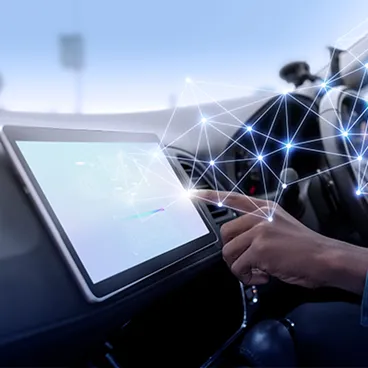
The concept of the self-driving car is a decades-old dream of the science fiction. But when you have bought a new car recently, you must have made a big leap into that future. This is called the technology that fills the gap between full manual driving and full autonomy, which is known as Advanced Driver Assistance Systems or ADAS.
ADAS can be described as a combination of electronic technologies, which are used to guide drivers in their driving and parking tasks. Instead of becoming a full-fledged controller, ADAS performs the role of a co-pilot, which is to make driving vehicles safer and more enjoyable by automating, adjusting and refining vehicle systems to be safe and drive better. The very end purpose of ADAS is not convenience but a dramatic minimization of human error, a contributor in an overwhelming majority of road accidents.
The Building Blocks: The ADAS Vision of the World.
To be useful, an ADAS should be able to sense the environment in a manner that is both accurate and reliable enough to compete, and in other cases exceed, the human senses. This is by the way of an advanced system of cameras and sensors which serve as the eyes and ears of the car. Such systems are not independent, and they integrate information about various sources into a holistic, 360-degree view of the environment around a vehicle. The key components include:
Radar (Radio Detection and Ranging): Radar sensors are the ADAS workhorse, especially in distance and relative speed functions. They send out radio waves which reflect back on the objects and timing how long the signal takes to come back, the system is able to determine the distance of the object, speed and angle of the object. Radar is very useful during weather conditions that are unfavorable such as rain, fog, or snow where cameras may fail. Long-range radar in the front grille is usually used to provide adaptive cruise control and automatic emergency braking, and short-range radar in the corners of the car to track the blind spots.
Cameras: Cameras give images that give abundant visual information just like the human eye. They are essential when information about images needs to be recognized, e.g. road signs, road lane markings, picking out pedestrians and bicycles, and offering a video display of a parking area. These can be attached at the back of the windshield, close to the rear view mirror. Poor lighting or glare or dirty lenses may however degrade their performance.
LiDAR (Light Detection and Ranging): LiDAR is a more developed technology that produces a high-resolution, three dimensional map of the surrounding by firing millions of laser pulses per second and recording the time they take to bounce back. It also provides very accurate depth perception and is believed by most to be what is needed to advance automation further. LiDAR is now found in high-end models, though it was too expensive to be used in consumer vehicles in the past.
Ultrasonic Sensors: It is the short range heroes of the ADAS mostly meant to be used in low speed maneuvers such as parking. They operate under a similar principle as radar except that they operate with sound waves. They are generally in the form of a small, round disc on the front and the rear bumpers. They send a sound wave with high frequency and wait to get the echo back to identify the curbs, other cars, and any other obstacles in the parking space.
Central Computer and Sensor Fusion: The basic data of individual sensors is meaningless in itself. Magic actually occurs in the powerful central computer in the vehicle. The computer then takes the information of all these sources, radar, the visual identification offered by the camera and the 3D map offered by LiDAR, and uses a process known as sensor fusion to produce an accurate, reliable and single model of the surrounding world of the car. Such redundancy is essential to safety, and is necessary in case one sensor is not functioning or is impaired in some way, the others will make up.
Typical ADAS Characteristics in Practice.
These sensors can be combined in various manners, and this can be used by carmakers to produce a variety of features that are now familiar. We can deconstruct the functioning of some of the most popular ones:
Adaptive Cruise Control (ACC): The days of the conventional cruise control that was merely an indicator to keep the vehicle at a constant speed have disappeared. ACC encompasses a forward-facing camera or radar to observe the vehicle before it. You also determine your desired speed and following distance. When the system notices the slower-moving vehicle, then it will automatically reduce the velocity of your vehicle to sustain the distance. When you clear the path it will speed up to your predetermined speed. It works very well in highways with stop and go traffic.
Lane Keeping Assist (LKA): This feature is placed on the windshield and it has a camera that is continually scanning the road to determine the road markings. Lane Departure Warning It is a passive system and it works like this, as you start to go out of your lane without turning the steering wheel, it will alert you by putting on a visual, audible or haptic (vibration of the steering wheel) alert..
Automatic Emergency Braking (AEB): It is arguably one of the main safety improvements over the last few years. With a radar and camera, AEB is able to monitor the road ahead, all the time, in order to predict possible crashes with cars, pedestrians, or bicycles. Provided that it recognizes an imminent crash and the driver fails to do so in time, the system will give a warning, then in case of need, automatically apply the brakes to prevent a crash altogether or at least minimize the impact speed.
Blind-Spot Monitoring (BSM): Blind-Spot monitoring is a device that is placed on the rear corners of the car by radar sensors that monitor the vehicles in the other lanes, which the driver may not notice. A visual alarm (normally seen in the side mirror) is activated when a vehicle enters the blind spot. Numerous systems also issue a haptic or auditory notification to the driver in case he or she turns on the turn signal when a car is in the blind spot.
The Advantages and the Disadvantages.
The multiplication of ADAS is supported by its enormous advantages:
Improved Safety: This is the major objective. As a watchful co-pilot, ADAS will be able to avoid the fatigue, distraction or misjudgment related accidents.
Heightened Comfort and Convenience: The elements such as adaptive cruise control and traffic jam assist minimize the fatigue of a driver during long trips and in a traffic jam.
Setting the stage to Autonomy: Autonomous vehicles are built through every feature of ADAS. The future of the self-driving cars of tomorrow is greatly reliant on the technology, regulations, and public trust that is being established nowadays.
But there is no smooth sailing on the road:
Driver Over-Reliance and Complacency: One of the potential dangers is that the drivers will start over-relying on the technology and view these assistance systems as autonomous systems. This may cause fatal incidences of the driver being unprepared to resume control once the system overloads.
Limitations with the System: ADAS is not fall-proof. Heavy rain, snow or dirt can blind sensors. Systems based on cameras may be problematic with dim markings on the lanes or direct sunlight. Definitely, drivers should realize that these systems are not applicable to all circumstances and that there are limits of their operation.
Cost and Repair Complexity: ADAS features increase the original cost of the car. Moreover, a small fender bender may necessitate very costly sensor calibration that is carried out by highly trained technicians using specialized equipment in order to make sure the systems are operating properly.
The Future of ADAS
ADAS is developing at a high rate. The following are enhanced integration and advanced capabilities. Systems capable of navigating highway interchange, automatically changing lanes and reading road signs showing the speed limit and adjusting cruise control are already in place. The border between sophisticated and conditional automation (SAE Level 3) is slowly fading.
With the maturity of the technology, Vehicle-to-Everything (V2X) communication will also come into focus where vehicles will not only become more aware of their direct surroundings, but also involving other cars, road signs, and traffic lights. This will lead to a collaborative ecosystem, which will improve safety and traffic.
Conclusion: Collaborative Future on the Road.
The development of ADAS is a groundbreaking breakthrough in car technology and safety. They do not concern substituting the driver rather they involve establishing a synergistic relationship between the human and the machine. ADAS can save thousands of lives and make driving better as it will become a watchful and uncompromising partner that will protect us.
Nevertheless, learning is the solution to accessing this potential. The drivers should know what the systems can and cannot. They are advanced tools that are meant to help and not to be fully responsible. In this quest towards the future of automation, the greatest element in the car, at least in the near future, will always be the conscientious, knowledgeable and active human on the wheel.
 Media Pack Download
 Newsletters
 Industrial Events