
The Role of Simulation and Digital Twins in Automotive Development
Originality is highly important in such a dynamic field as automotive industry. That is precisely where two promising technologies, namely, simulation, and digital twins come into play. These tools assist the manufacturers in the design of better vehicles within the shortest time possible, and hence they are cheaper, safer, and of higher quality.
What is Simulation?
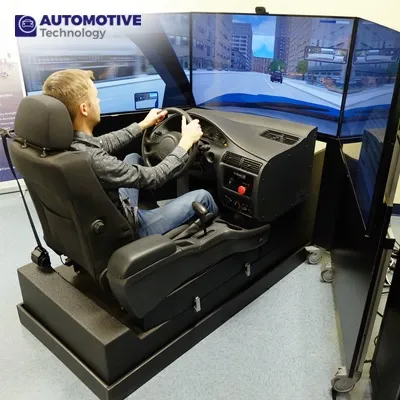
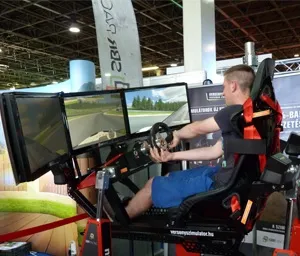
Virtual prototyping can be defined as the creation of a computer model of a certain vehicle or part of it in order to evaluate its work in actual conditions. One may picture it as a playpen where engineers can run their minds over their design and the real product they want to create.
For instance, simulations can check the efficiency of a car’s engine in conditions like temperature stress, or speed stress. This enables the engineers to fine-tune the design for the needed performance without the need for the physical parts at all.
What are Digital Twins?
Simulate is a simple form of a digital twin. It is an electronic twin of a tangible automobile or part that always synchronizes new data with the physical entity. This is like a event that is being broadcast in real time, like watching a life like simulation.
Digital twins enable tracing of the performance of a particular vehicle for the entire period of its use. For instance, a car on the road is one of the examples; if there is any scratch or any mechanical problem that will be shown in the digital twin in real-time. This feedback mechanism is useful in forecasting when maintenance is required and improving the equipment’s efficiency.
How Do These Technologies Benefit Automotive Development?
a. Enhanced Design and Testing:
Simulation enables engineers to try out designs on computers and less physical models are required. This accelerates the process of advancing the development and reduces the expenses.
Thus, a digital twin generates constant performance intelligence which enables engineers to make proper modifications to add value to the design and execution.
b. Improved Safety:
In the case of car crashes it is possible to mimic the fit and ascertain the effects on single car parts and the car safety devices.
Digital twins are integrated into the actual infrastructure of a vehicle and provide information on the state of a car, which helps to avoid the constant breakdowns.
c. Cost Efficiency:
It has been established that simulation has an inherent capability of reducing the amount of physical prototypes that are made thus cutting costs of production.
Manufacturers use digital twins to prevent a number of problems that would require expensive repairs or product recalls.
d. Faster Innovation:
They both speed up the testing and/or iteration cycle, meaning faster development of new features/improvements.
| Also Read: The Role of Simulation Technologies in Automotive Testing |
Real-World Examples
Many automotive companies are already leveraging these technologies:
- Simulations can be used by the Ford Company to create lay outs of its car models and check for safety measures and performance before manufacturing a physical model.
- Several organizations, such as General Motors, use digital twins to analyze their vehicles’ performance in real-time and schedule a maintenance service.
Looking Ahead
As the world becomes increasingly technologically driven, the function of simulation and digital twins in cars and automotive engineering will remain a constant. These tools will be even more critical in conceptualizing safer, efficient, and innovative automobiles.
Therefore, one can state that simulation and digital twins act as innovative solutions that help to improve the automotive industry throughout the processes of design, testing, and maintenance. These technologies enable manufacturers to produce superior automobiles in a shorter time and cheaper, hence improving the driving experience for all.
 Media Pack Download
 Newsletters
 Industrial Events