
From Concept to Reality: The Journey of Cutting-Edge Automotive Prototypes
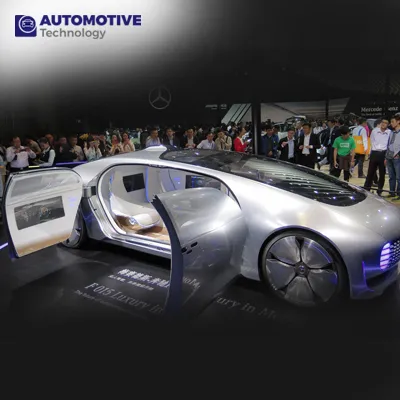
The annual international automobile show has been one of the pioneer industries in charting the course to the future for over a hundred years now that is by virtue of new designs, new technologies not to mention environment friendly automobiles. Prototyping is recognized as one of the key activities in the development of an innovative product which is to enter the market. These are intermediate forms of vehicles that exist between a physical idea and a car that is ready for assembly line, they that are built with the intention of appraising new designs, technologies and materials for use in the production of vehicles. Specifically, in this article you will learn the path of modern automotive prototypes’ development from idea to realized project.
1. The Concept Stage: Vision and Design
Since an automotive prototype is an actual physical creation it has a certain process behind it and here is a step by step look at it. This stage is more at the discretion of designers and engineers whom have ideas on how mobility can be in the future. It could be a vision of the car of the future that is designed to be more aerodynamic than the existing models or a car filled with features to support the autonomy of the vehicle. Then the idea takes form in the form of concept generation, drawings, and preliminary designs and passing through a digital envelope known as computer-aided drawing or engineering designs. Designers are more occupied with the appearance of the intended product while engineers are more concerned with the practicality of those designs. Here considerations such as safety, power, flexibility, pollution, and fuel consumption are taken into consideration.
2. The Engineering Phase: Bringing Design to Life
After this point is complete, the engineering team takes over the project by trying to execute the concept in a more functional manner. This stage requires high amount of research and development to prove the viability of adding new technologies such as electric drivetrain, hybrid or autonomous driving software. Engineers decide what type of materials should be used whether it is new light weight composites or advanced metals or even 3D printed parts. There is always a need to make a prototype as revolutionary as possible but also think of the possibility to apply it in real life and ensure the safety of the users.
In this phase, the best tool is the simulation for this activity is as follows: Advanced software is then employed to estimate the behavior of the car in various scenarios so that engineers do not have to produce mock automobiles for each alterations. Huge time and money saving is achieved by this method of digital engineering which offers useful information even before a physical prototype is built.
3. Building the Prototype: Turning Ideas into Reality
Once the phases of design and engineering are complete the physical process of building the prototype is undertaken. More commonly called a ‘proof of concept,’ the first prototype is usually constructed with hand tools in what might also be called ‘artisanal’ style, as this kind of work often requires highly refined techniques. This model is not for the purpose of commercial use but only for trial and for the purpose to show that the idea is possible. Such adaptations can include new body designs or an engine technology, interiors made from new material age and so many others.
Prototyping is a creative process and that is why it can be approached in a number of ways. Some automotive companies create what is called “mule cars” which are regular cars to which new parts are fitted on. Some develop concept vehicles that are almost complete and working machines- these are not just test benches for new technologies and possible design; they may be styled in an artistic futuristic manner. Prototype phase is quite costly and time consuming but is pre-requisite to fine tune out every aspect of a vehicle.
4. Testing and Validation: The Crucial Step
When one is designing a product, having a prototype is a big achievement, the next thing is getting it to the next level which is testing. Prototypes of automobiles endure different trials thereby assessing their safety, performance and durability. These tests include aerodynamic tests done in wind tunnels, the tests on safety done by car crashing and the tests on usability done by road testing. Both tests are beneficial to engineers since they offer feedback on the design, apart from showing whether there are defects in the design.
A major part of this phase is validation. The requirements with regards to the prototype include being compliant with the regulatory standards as well as the capacity to function properly in various settings. Engineers also determine how the materials stand up to being an object and how functional new technologies added are and how efficient the car is. A lot of problems may come out when the car is in the market hence through testing, any problems that may arise are solved before the cars are produced.
5. Refinement: Learning from the Prototype
Feedback is gained from testing and this leads to improvement. In this stage changes may be made to either the design, the materials or the technologies based on results from tests. Prototypes can be developed in as many rounds as needed with each round being better than the previous one. Both the chemical and the mechanical engineers try to develop everything to the detail, while maintaining the design to be efficient, functional and easily manufacturable.
This is where the vision is fine tuned into a tangible vision, the vehicle is brought to a state where it can be marketed as a new face of automotive manufacturing. Each modification is done with the end consumer being the priority; this is especially done with the aim of improving the drive, safety, and general performance of the car.
6. Production and Launch: From Prototype to the Streets
When the tested prototype has been stabilized and approved, a vehicle goes through the production mode. During this stage, the manufacturers prepare themselves for high-volume production by putting in place the relevant production lines, acquiring the raw materials, and finalizing on the production procedures that are to be followed. The transformation from ‘idea to implementation’ ends with the development of the product that is ready to be sold in the market.
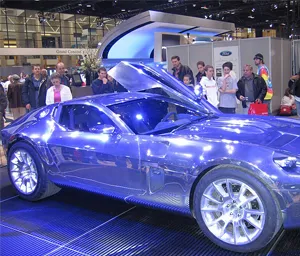
Introducing a new model to the market is always a great achievement for the automotive firm especially since it has taken its research, planning, and technological testing to develop the new car. Motor vehicle prototypes on occasion are state of the art and act as vehicles that can define an industry and layout trends for the future automobiles.
7. Prototypes: Shaping the Future of Automotive Innovation
Manufacturing samples are not only a test drive of new cars—they are a look into the future of the automotive market. All well-established technologies that some of us use for a ride now were initially integrated as automotive prototypes, including electric automobiles, ADAS, and autonomous driving systems.
There are always forces which act as barriers to innovation and development but the real essence is in overcoming these forces. High tech prototypes advance the performance in diverse ways that make sure that the automobiles of the future will have improved safety features, efficiency enhanced by technology as well as having sophisticated systems within them.
Conclusion
The process of new generation automotive prototypes’ manufacturing can be considered as a multifaceted one, which would require several stages, namely design, engineering, testing and last but not the least, refining. All the steps are necessary to bring into effect the visionary ideas into reality. The use of prototypes shall therefore advance with the application of technology in envisioning tomorrow’s transportation systems.
Whether it is flashy designs or innovative technologies, the automotive prototype realm is one set for innovation, thus eye-opening.
 Media Pack Download
 Newsletters
 Industrial Events