Electric Vehicle Infrastructure: The Challenge of Building a Global Charging Network

Some solutions to climate change are electric vehicles, or EVs, as the world aims at attaining lower carbon mobility. However, to accommodate increasingly more EVs, there is need to develop a convenient charging mechanism. Setting up charging stations around the world is relatively challenging but quite significant to facilitate the traveling through electric automobiles, for everyone.
The Importance of Charging Infrastructure
However, one major drawback of EVs is the customer concern over the range distance of the EV as this is likely to be an incapable distance for the car to cover before requiring recharge. While driving a gasoline automobile can be replenished quickly at many service stations in a matter of minutes, charging of an EV can take even hours or days depending on the technology used at home or elsewhere. Thus, a detailed charging network is essential to address such an issue. The network of charging stations for electrical cars should be developed to make the usage of EVs more comfortable and suitable.
Types of Charging Stations
Charging stations can be categorized into three main types based on their charging speed: This means the Level 1, Level 2 and DC fast charging. SAE or society of automotive engineers have put these charging options into 3 categories of level 1 of which requires an ordinary household power outlet and can take 3- 8 hours to fully charge an EV. Second, Level 2 chargers available in public stations such as shopping malls and offices are capable of powering vehicles in a few hours. Supercharger has been deemed to be the fastest, can offer a considerable amount of charge in half an hour or even less. The need for these various types of chargers can be seen due to the different classes of users of the EV such as the urban daily user, the weekend user, and the interstate traveler.
The Challenges of Infrastructure Development
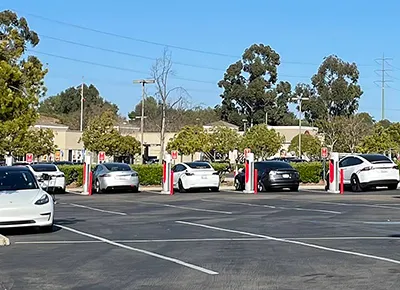
Setting up a charging network poses numerous challenges across the globe. First of all, participants mentioned the question of finances. Installing and enhancing the chargers come with a lot of capital outlay, and not all nations or states can afford to setup charging points.
| Also Read: Top 9 Electric Vehicles to Watch Out for in 2025 |
Moreover, rolling out the charging stations might be challenging by the fact that many areas might not afford the necessary electrical grid required to support the demand.
Secondly, the place is significant. The location of charging station shall therefore be well chosen so that it can be in locations that is easily accessible. This implies population density, traffic flows, road network arrangements and other factors. Nevertheless, identifying the best places to establish charging stations is not easy because it requires information on likely future trends of electric cars and the typical usage patterns in particular regions.
Collaboration and Standardization
As such, several stakeholders are required in order to tackle these challenges. Thus, the governments, private companies and utility providers need to synergize to come up with a fantastic strategy on how they are going to build the charging infrastructure. This can result in such partnerships as venturing between the public and private industries in bearing the cost and enhancing the fast growth of the charging networks.
Second, standardization is an important aspect in the development of the different initiatives. Essentially, there are multiple charging standards among EV manufacturers, which enhances confusion and in convenient among users. Coordinating the standards for charging equipment and connectors can also be achieved to avoid complexity in charging of the available stations by all the EVs. It is very essential in order ensure that a worldwide charging infrastructure is easy for users and faster to establish.
| Also Read: Wireless EV Charging: A Game Changer for Fleet Management |
Looking Ahead
However, it is important to understand that rapid advancement towards infrastructure construction for EV charging is under way across the globe. Most governments are putting measures that will force paid for the installation of chargers since they wanted members of the public to embrace the use of electric cars to reduce pollutants in the environment in cases where they couldn’t encourage production of electric cars. Furthermore, innovations like wireless charging and solar charging or having stations that require no charging at all are yet to be developed but when developed they will make the solutions better.
Therefore, the construction of a charging infrastructure to underpin the global growth of electric vehicles is not an easy process and that public funding, public-private partnerships and the development of common standards are needed. But if proper strategies are put in place electric vehicles are good for everyone and plays a key role in future sustainability through a good charging network.
While we as a society proceed to invest in and cultivate such framework, we possess the potential to create a cleaner, greener world based on electric cars.
 Media Pack Download
 Newsletters
 Industrial Events