
Smart Seating Systems: How AI Is Personalizing Comfort and Ergonomics
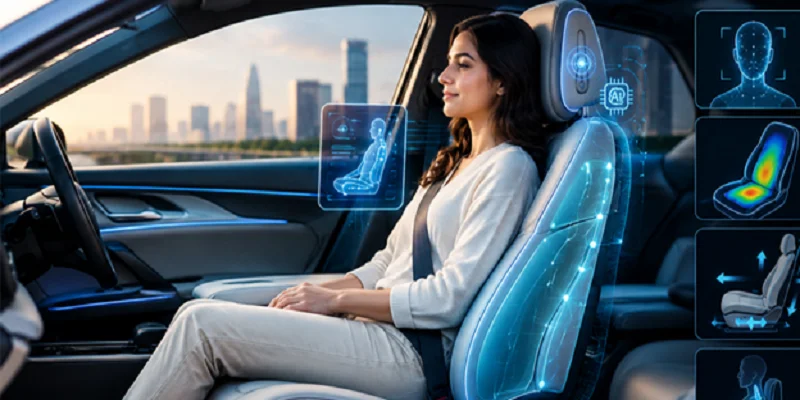
Car seats used to be a "set it and forget it" affair - a lever here, a dial there, and you were stuck with whatever compromise you found on day one. That era is quietly ending. Smart seating systems are turning the humble car seat into an active, learning part of the vehicle, one that watches how you sit, notices when you're uncomfortable, and adjusts before you even realize something was wrong.
This shift is being driven by a mix of automotive engineering and applied AI, and it's changing what "comfort" even means inside a car. Let's break down how it works, why it matters, and where it's headed.
What Are Smart Seating Systems?
Smart seating systems are seats embedded with sensors, actuators, and AI-driven software that continuously monitor an occupant's posture, weight distribution, and movement, then automatically adjust seat position, firmness, temperature, and support to maintain comfort and reduce strain - without the driver manually pressing a single button.
Unlike traditional power seats, which only move when a person tells them to, intelligent seating systems make decisions on their own. They learn from data. They react in real time. And increasingly, they personalize themselves for each individual who sits down, recognizing returning users and restoring their preferred setup automatically.
How AI Seating Systems Work Behind the Scenes
At the core of every modern AI seating system is a layered setup: sensors that collect data, a processing unit that interprets it, and actuators that respond.
Automotive seat sensors are the starting point. These typically include:
- Pressure and weight sensors woven into the seat cushion and backrest
- Capacitive sensors that detect occupant presence and posture shifts
- Temperature and humidity sensors for climate-responsive comfort
- Motion sensors that track micro-movements over a drive
The raw data from these sensors is essentially meaningless on its own - thousands of pressure readings a minute don't tell you anything by themselves. This is where AI comes in. Machine learning models trained on large datasets of human posture and comfort patterns interpret that raw sensor data, identify signs of discomfort (like uneven pressure distribution or repeated shifting), and calculate the ideal adjustment in real time.
This is the essential difference between a "powered" seat and an AI-powered seating system: one moves when told to, the other decides when and how to move on its own.
The Rise of AI Automotive Seating
AI automotive seating has moved from concept-car novelty to a genuine competitive feature. Automakers are investing here for a simple reason: comfort and safety are increasingly linked in consumers' minds, and long drives expose poor ergonomics fast.
A few trends are pushing this forward:
- Electric vehicles have more room in the cabin floor and console for the electronics and processing power seating systems need, since there's no transmission tunnel eating up space.
- Autonomous and semi-autonomous driving features mean people spend more time in a passive, seated position — increasing the importance of posture support during longer, hands-off stretches.
- Fleet and rideshare vehicles need seating that adapts quickly to different body types across many drivers per day, making manual adjustment impractical.
Together, these factors have turned smart automotive seats from a luxury add-on into an expected feature in mid-range and premium vehicles alike.
Key Features of Smart Automotive Seats
Not all smart seat technology looks the same, but most systems on the market today share a common feature set:
- Automatic posture correction — detecting slouching or leaning and nudging seat contours to restore alignment
- Pressure mapping — identifying "hot spots" where too much weight concentrates and redistributing support
- Memory profiles — storing individual preferences tied to a face, phone, or key fob
- Climate-responsive cushioning — adjusting ventilation or heating based on body temperature readings
- Fatigue detection — using posture and micro-movement data to flag signs of driver drowsiness
Some premium systems go further, using massage functions triggered by detected muscle tension, or seat bolstering that tightens automatically during cornering to keep occupants stable.
Occupant Sensing Technology Explained
Occupant sensing technology deserves its own spotlight because it's the safety backbone of smart seating. Originally developed to improve airbag deployment (a seat needs to know if it's holding a child, an adult, or nothing at all before deciding how — or whether — to fire an airbag), occupant sensing has expanded well beyond safety compliance.
Today's systems can estimate:
- Occupant size and weight, for tailored airbag and seatbelt tensioning
- Seating position, to detect out-of-position risk before a collision
- Presence of children or pets left in a vehicle, triggering alerts
- Driver alertness, by combining seat sensor data with steering and eye-tracking inputs
This is a good example of how automotive seating technology and vehicle safety systems are converging - comfort features and safety features increasingly draw from the same sensor pool.
Benefits of Adaptive Seating Systems
Why does any of this matter to an everyday driver or passenger? A few concrete benefits stand out.
Reduced fatigue on long drives. Adaptive seating systems continuously micro-adjust support, which prevents the kind of static, prolonged pressure that causes numbness and soreness on road trips.
Better posture, fewer aches. Because these systems correct slouching and uneven weight distribution in real time, they help address the lower back and neck strain that's common with long commutes.
Personalization without effort. No more re-adjusting mirrors and seat height every time someone else drives the car - the system recognizes you and restores your profile instantly.
Improved safety outcomes. Combining occupant sensing with posture data helps ensure restraint systems perform as designed, and can flag drowsy or distracted driving earlier.
Inclusive design. People with different body types, disabilities, or chronic pain conditions benefit from seating that adapts to them, rather than forcing them to adapt to a fixed seat shape.
AI Seat Adjustment: Personalization in Real Time
The phrase AI seat adjustment specifically refers to the moment-to-moment decision-making happening inside these systems. Rather than a one-time calibration, it's continuous: the seat is effectively asking, dozens of times a minute, "is this still comfortable, and if not, what's the smallest adjustment that fixes it?"
This matters because human bodies don't stay still. A position that felt right at the start of a drive can become uncomfortable 40 minutes later simply because muscles fatigue and posture drifts. Static seats can't respond to that. AI-driven ones can.
Automotive Seat Ergonomics: Why It Matters
Good automotive seat ergonomics isn't just about plush cushioning - it's about spinal alignment, even weight distribution, and support that matches how a human body is actually shaped to sit. Poor ergonomics over years of driving is linked to chronic back pain, a well-documented occupational hazard for professional drivers.
AI ergonomic seating approaches this problem differently than traditional ergonomic design. Instead of designing one "ideal" seat shape for an average body, it designs a system that can reshape itself for many different bodies and postures - which is a far more realistic solution, since there's no such thing as an average driver.
Challenges Facing Smart Seating Systems
It's worth being honest about the hurdles too. Cost remains a barrier - the sensors, actuators, and processing hardware add real expense, which is why these features still cluster in higher trims. Data privacy is another concern, since seats that recognize individuals and track biometric-adjacent data raise questions about how that information is stored and used. And there's a reliability question: a malfunctioning motor in a traditional seat is annoying; a malfunctioning AI system making unexpected adjustments while driving needs to be engineered very conservatively.
The Future of Intelligent Seating Systems
Looking ahead, expect intelligent seating systems to become more predictive rather than purely reactive - anticipating fatigue before it sets in, based on drive duration, time of day, and historical patterns, rather than waiting for discomfort to show up in the sensor data. Integration with wearables and health apps is also likely, letting a seat factor in something like a rough night's sleep before a morning commute even starts.
Frequently Asked Questions
What is a smart seating system?
A smart seating system uses embedded sensors and AI to monitor an occupant's posture and comfort, then automatically adjusts the seat's position, firmness, and support without manual input.
How do automotive seat sensors work?
Automotive seat sensors detect pressure, weight, temperature, and movement across the seat surface, feeding that data to an AI system that identifies discomfort and calculates the right adjustment.
Are smart automotive seats worth it?
For frequent or long-distance drivers, smart automotive seats can meaningfully reduce fatigue and back strain by continuously correcting posture, which is difficult to replicate with manual adjustments alone.
Is occupant sensing technology only for safety?
No. While occupant sensing technology originated for airbag and seatbelt safety, it's now also used for comfort personalization, drowsiness detection, and child-presence alerts.
What's the difference between a power seat and an AI seating system?
A power seat only moves when a person manually triggers it; an AI seating system makes its own adjustment decisions continuously, based on real-time sensor data.
 Media Pack Download
 Newsletters
 Industrial Events