Innovations in Automotive Lighting: LED, OLED, and Beyond
Introduction:
Automotive lighting can be referred to as one of the main accents in automotive design as it is a functional element that not only defines the attractiveness of the car as an object that is popular among car enthusiasts but also contributes to the vehicle’s safety. The aspect of technology has continued to improve with time and so as the improvements that are seen on automotive lighting. From the simple utility of an incandescent bulb to the innovation of LED and OLED systems, there is now a huge revolution in how it illuminates roads and improves one’s driving.
The Evolution of Automotive Lighting
- Incandescent Lighting: It is important to state that for rather a long time, filament bulbs have been the most commonly used in automobiles. While they were used for illumination and were adequate for the purpose, they were not very efficient in terms of energy and more often than not, they had a shorter lifespan than the modern types of bulbs.
- Halogen Lighting: These are the types of bulbs that followed and they included halogen bulbs that were slightly better than the normal bulbs in that despite giving better light they have a long lifespan. They dominated the market for some time because they were cheaper and overall performed better.
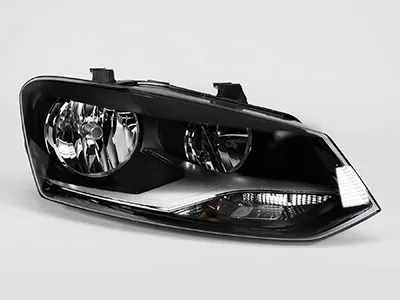
3. Xenon/HID Lighting: Its evolution over the past decade unveiled High-Intensity Discharge (HID) or Xenon lights as another aseptic innovation that expanded the brightness and efficiency of the automobile. They were brighter than halogen bulbs and gave a whiter light which enhances visibility and at the same time made vehicle to look classy.
LED Lighting: Revolutionizing Automotive Illumination
Light Emitting Diodes (LEDs) have become a game-changer in automotive lighting due to their numerous advantages:
- Energy Efficiency: LEDs use less energy than the halogen or HID bulbs; this reduces the energy consumption which in turn cuts on fuel consumption.
- Longevity: LEDs are longer lasting than halogen bulbs and hence it is used they do not need to be changed as often as halogen bulbs do.
- Brightness and Clarity: LEDs provide better light output and have better definition on what is illuminated, especially at night and this improves the safety of driving.
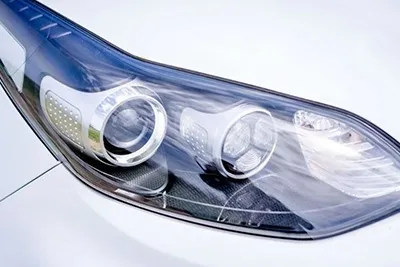
- Design Flexibility: LED lights are smaller in size and this makes them allow more creativity and flexibility in the way they are installed. This has resulted in complexity, especially to the headlight assembly and such features like adaptive headlights and sequential turning signals.
- Durability: That is why the use of LEDs is more suitable for cars – they are less sensitive to vibrations and shocks.
OLED Lighting: The Next Frontier
OLEDs are innovations in automotive lighting and are defined as Organic Light Emitting Diodes. Unlike traditional LEDs, OLEDs use organic materials to emit light, which offers unique benefits:
- Uniform Illumination: OLEDs give out light evenly and in a diffused manner compared to LEDs where the light is generally directionally emitted and this can improve on elegance of the lighting of cars.
- Design Flexibility: The OLEDs can be produced in very thin flexible sheets; therefore, new and unusual designs are possible. This entails the embedding of lighting into the car’s body panels and fashioning of special lighting patterns.
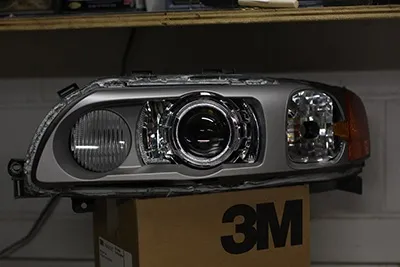
- Improved Safety: OLED lighting has the potential of being used as continuous large light surfaces enhancing visibility that is safety to the driver of the motor vehicle and other road users.
- Energy Efficiency: While OLEDs are less efficient than LEDs, they are far superior to the traditional lighting technologies we have been using.
Beyond LED and OLED: Emerging Technologies
- Laser Lighting: Laser headlights are new age headlights that provide significantly higher luminosity and a longer reach. It creates a bright light beam and is characterized by its energy consumption and compact size of the structure. But at present, they are costlier and to make them safe, they demand precise control mechanisms.
- Matrix Headlights: Matrix headlights employ both, the LEDs and sensors to adjust the light beam depending on the condition of the road. They come with the options that allow for their on/off switch and also the direction plus brightness of the light to be adjusted in a way that such illumination does not dazzle other roadway users.
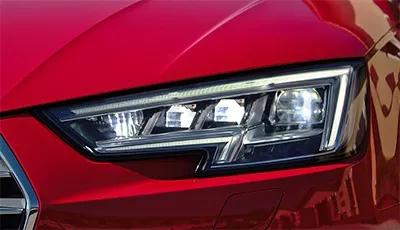
3. Adaptive Lighting Systems: The kind of systems used in such cars also work by using sensors and cameras that assist in flicking the headlights according to the state of the road, the speed of the car, and even the weather. This innovation assists in increasing the perception in different driving conditions and thus, can be regarded as contributing to increased safety.
The Future of Automotive Lighting
With development of car technologies, it is possible to predict additional developments within the sphere of automotive lighting. Future developments may include:
- Integration with Autonomous Vehicles: Lighting systems may get even more advanced and participate in relaying signals to other road users and integrate into self-driving cars.
- Smart Lighting Systems: The combination of artificial intelligence, machine learning and smart lighting systems suggests one could create even smarter lighting systems that would be able to adapt to the driving environment real-time.
- Sustainable Materials: New findings in the field of materials may pave way to more efficient and eco-friendly solutions for lighting the automobile, hence augmenting the aspect of ecology linked with automotive lighting.
Conclusion:
Innovations in automotive lighting, from LED to OLED and beyond, are transforming the way we experience and interact with vehicle illumination. These advancements not only enhance the aesthetic appeal of vehicles but also improve safety, efficiency, and overall driving comfort. As technology continues to evolve, we can look forward to even more exciting developments in automotive lighting that will shape the future of transportation.
 Media Pack Download
 Newsletters
 Industrial Events