
Euro NCAP News: Automotive Industry Impact on B2B Player.
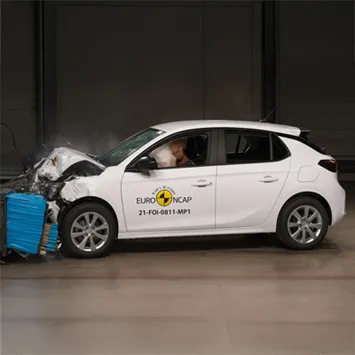
The automotive industry in Europe keeps on developing, and the safety standards follow suit as the driving force behind innovation and consumer trust. European New Car Assessment Programme (Euro NCAP) is an independent organization that analyzes the safety of cars thus the program is instrumental towards defining the future of the automobile industry. Its changes and new laws and regulations not only impact vehicle manufacturers but have extensive consequences to B2B participants in the automotive sector, suppliers, parts suppliers, technology suppliers as well as fleet operators.
This paper discusses the new developments by Euro NCAP and its implications to the B2B sectors in the European market.
The Drift toward the Higher Safety Levels.
Euro NCAP has been making an enormous leap in terms of safety testing over the recent years. As the vehicle occupant safety, pedestrian protection and driver assistance system have become more important in the considerations, the most recent updates are pushing manufacturers and suppliers to evolve more than ever.
| Also Read: What Are the Advanced Driver Assistance Systems (ADAS) and How Do They Operate? |
Among the most visible changes, there is the change in the emphasis of crash tests to a more comprehensive approach to safety. Advanced driver assistance systems (ADAS) have been added to Euro NCAP, and they are becoming the key to obtaining higher safety ratings. The evaluation of these systems that comprise automatic emergency braking (AEB), lane-keeping assist, and adaptive cruise control are tested on real-life situations.
In the case of B2B enterprises within the automotive supply chain, it implies the increased push towards investment in ADAS technologies and application of artificial intelligence (AI) and machine learning to its products. The nature of the demand of high-quality parts that can facilitate these systems is at its peak, and this makes B2B suppliers in electronics, software, and sensors successful.
Expansion of Testing Criteria of Euro NCAP.
The new and extended testing procedures developed by Euro NCAP correspond to the enhancement of the assessment of the safety of vehicles under various conditions of use. The tests are aimed at vulnerable road users (VRUs) which include pedestrians, cyclists and motorcyclists and their ability to perform well in the event of encountering vulnerable road users.
This change to the vulnerable road user protection is especially relevant to B2B manufacturers working on the production of the car exterior parts, including bumpers, mirrors, and windshields. It promotes the urge to manufacture soft exterior materials and technologies that mitigate the impact. Materials companies dealing with composite materials or automobile plastics may take advantage of this by working on the development of products that would make pedestrians safer.
The Euro NCAP also now takes into account the effectiveness of vehicles in dealing with the systems of avoiding accidents in more complicated traffic conditions. This involves checking of the capability of the car to cope with street environments that have people and bicycles that may collide with the car. B2B organizations engaged in autonomous vehicle (AV) technologies and connected infrastructure are in the best places to exploit these trends to develop the feature of vehicle-to-everything (V2X) communications to enhance road safety.
Electrification and the Environment.
As the European Union is heading in a more environmentally friendly direction, the more recent changes in Euro NCAP also indicate how the industry is also emphasizing on sustainable technologies in the automotive industry. The Euro NCAP has begun to evaluate the environmental impact of a vehicle based on such factors as the carbon emissions, battery recycling and the energy efficiency.
This is a major opportunity to B2B firms that supply electric vehicle (EV) parts. Among the battery suppliers and charging infrastructure providers, companies will have to prepare to respond to the increased demand of cleaner and greener vehicles. All these changes in the structure of Euro NCAP are in line with the EU Green Deal and its effects on the automotive industry.
Also, Euro NCAP has created a new range of sustainability requirements in the vehicle tests such as the way in which manufacturers are addressing the recyclability and reuse of materials. It implies that the B2B partners, operating with the automakers, have to pay attention to the performance and cost-efficiency but address the material sustainability and environmentally-friendly production procedures.
Data and Connectivity as a Key to Safety Assessment.
Automobile industry is also rapidly evolving into a data-driven industry. According to the latest updates of Euro NCAP, connectivity has been acknowledged as a means of improving the safety of vehicles. Specifically, they have introduced cyber security tests to determine the level at which vehicles manage the digital threats that may jeopardize their safety.
This is a colossal opportunity to B2B tech companies, working in the automobile cyber security sector. With the increases in the connectedness of cars, the threat of cyber-attacks grows. Firms offering data encryption, cloud storage and secure vehicle-to-infrastructure will be in demand.
Furthermore, the adoption of the big data analytics in the driving behavior and vehicle diagnostics will likely be used as a major contribution towards enhancing vehicle safety. As a manufacturer of telematics B2B, this is an important time to be creative and develop intelligent solutions that will make the cars safe and efficient to the fleet operators.
The virtualization of Autonomous Driving Technologies.
Among the most notable and the most significant changes to be introduced to the testing protocols established by the Euro NCAP is the issue of autonomous vehicles (AVs). Euro NCAP has also developed testing that is specifically targeted at Level 3 and Level 4 self-driving systems offering partial to complete automation of vehicles. These tests determine the performance of autonomous cars in real-life settings, evaluating the way the car can react to unforeseen dangers, complicated conditions, and accidents.
This is a decisive development in the case of B2B industries that deal with autonomous vehicle technologies. It is now expected that companies offering AI-enabled sensors, LIDAR systems and real-time data processing platforms assist the creation of AVs that comply with these high global Euro NCAP standards.
Also, these updates will be useful to fleet management firms that are the first ones to deploy an autonomous fleet of vehicles. The extended testing of Euro NCAP will assist in assuring that the autonomous vehicles are safe besides being reliable to the passengers, pedestrians, and other road users.
Consumer Trust and B2B Implications.
Consumer confidence is directly affected by safety ratings by Euro NCAP. The rating of Euro NCAP is an important marketing instrument as B2B companies in the automotive industry do their best to retain their competitiveness. The manufacturers and suppliers have to make sure. that the parts they supply are at par with the current Euro NCAP standards. This encompasses crash test ratings to the performance of the ADAS systems.
In the case of B2B marketing and sales department, it is essential to know the impact of Euro NCAP ratings, as far as consumers are concerned, on their buying behavior. The greater the merit of the Euro NCAP safety, the more likely is that it is of high quality and may distinguish a car within a saturated market. Consequently, they will allow suppliers who will be able to respond to such high requirements to enjoy more advantageous relationships and a wider market share.
Conclusion what next B2B in the European Automotive Industry?
The recent Euro NCAP upgrade shows that there is a definite shift to more intelligent, safer, and sustainable cars. At the center of this change is the B2B industry which includes manufacturers, suppliers, technology firms, and service providers. The automotive industry in Europe is faced with such changes and as it goes through these changes, it is critical that B2B players are fast to adapt, invest in innovation and be highly focused on quality and safety.
As the Euro NCAP influences the active development of the automotive safety standards, businesses that engage in the manufacturing of automotive parts, technologies and services must be flexible and follow the growing popularity of ADAS, autonomous driving, sustainability and connectivity. The growth prospects are enormous but the challenges are as well. Those who will succeed are those who will be able to ensure that their safety standards meet the new standards and also spur the technological changes that would realize the innovations.
It is an opportunity of remarkable opportunity in the coming few years to B2B companies in the automotive supply chain. The most important success factor will be to comprehend and implement the updates of the Euro NCAP whereby products and services have to comply with the recent safety and environmental regulations.
 Media Pack Download
 Newsletters
 Industrial Events