Designing for Comfort and Wellness: How Vehicle Interiors Are Enhancing Passenger Well-Being
Introduction
The automobile has long been defined by performance metrics — horsepower, torque, acceleration, and fuel efficiency. But a quieter revolution is unfolding inside the cabin, one that has little to do with how fast a car can go and everything to do with how good it makes people feel while getting there. Automakers are increasingly treating the interior not merely as a functional space to move people from point A to point B, but as an environment engineered for physical and mental well-being. This shift toward Automotive Passenger Comfort reflects a broader cultural movement: consumers now expect their vehicles to actively support their health, much like they expect it from their homes, offices, and wearable devices. Vehicle Interior Wellness has become a genuine design discipline, blending ergonomics, materials science, air purification, acoustic engineering, and artificial intelligence into a cohesive experience.
This article explores how modern vehicle interiors are being reimagined through the lens of comfort and wellness, and why this transformation matters for drivers and passengers alike.
The Rise of Human-Centric Vehicle Design
For decades, interior design in vehicles was largely dictated by manufacturing constraints and cost efficiency. Today, the philosophy has flipped. Human-Centric Vehicle Design places the physical and emotional needs of occupants at the center of every decision, from the curvature of a seat to the color temperature of ambient lighting. Designers now collaborate closely with ergonomists, physiotherapists, and behavioral psychologists to understand how the body and mind respond to prolonged periods inside a moving cabin.
This approach acknowledges an uncomfortable truth: many people spend more time in their cars than they'd like to admit, whether commuting, road-tripping, or simply sitting in traffic. Fatigue, stiffness, poor posture, and stress are common byproducts of time spent behind the wheel. Wellness-Focused Vehicle Design aims to counteract these effects by treating the cabin as a restorative space rather than a purely transactional one.
Ergonomic Seating: The Foundation of Comfort
No element of the vehicle interior has as direct an impact on physical comfort as the seat. Ergonomic Car Seat Design has evolved dramatically, moving beyond basic cushioning toward multi-zone support systems that adapt to individual body types and postures. Modern seats often feature adjustable lumbar support, contoured bolsters that reduce pressure points, and multi-directional adjustability that allows occupants to fine-tune their seating position with precision.
Ergonomic Automotive Seating now frequently incorporates massage functions, ventilation, and heating elements that work together to reduce muscle tension during long drives. Some premium manufacturers have introduced seats with pressure-mapping sensors that identify areas of discomfort and automatically adjust cushioning in real time. Memory foam layers, breathable fabrics, and orthopedically informed contours are becoming standard rather than exclusive luxury features, signaling that comfort is no longer a premium add-on but a baseline expectation.
Beyond the front seats, rear passenger comfort has also seen significant investment, particularly in larger SUVs and luxury sedans where reclining rear seats, adjustable headrests, and leg rests create an experience closer to a first-class cabin than a traditional back seat.
Cabin Comfort Technology and Climate Control
Temperature regulation plays an outsized role in perceived comfort, and Automotive Climate Control Systems have become remarkably sophisticated. Multi-zone climate systems now allow every occupant to set their own preferred temperature, while some vehicles incorporate radiant heating elements built into seats and door panels for more targeted warmth without overworking the entire cabin's air system.
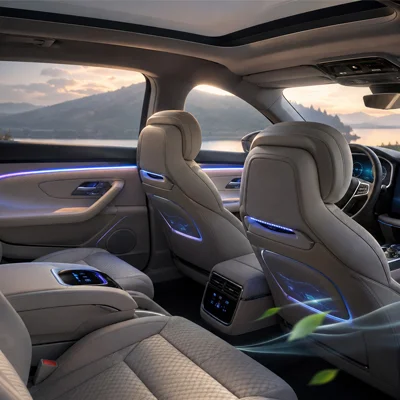
Cabin Comfort Technology extends beyond temperature alone. Ambient lighting systems that mimic natural daylight cycles help reduce eye strain and support alertness during daytime drives, while dimmer, warmer tones in the evening promote relaxation. Some manufacturers have introduced scent diffusion systems that release calming aromas like lavender or invigorating citrus notes, subtly influencing mood during the journey. Acoustic tuning, adjustable seat vibrations synced to music, and even simulated “breathing” lighting patterns designed to encourage relaxed breathing are increasingly common in premium and mid-range vehicles alike.
Breathing Easy: In-Car Air Quality Systems
Air quality is one of the most overlooked yet impactful aspects of cabin wellness. In-Car Air Quality Systems have moved far beyond basic climate control filters. Many modern vehicles now include HEPA-grade filtration capable of capturing fine particulate matter, allergens, and pollutants before they enter the cabin. Some systems actively monitor CO2 levels and automatically cycle in fresh air when concentrations rise, helping to prevent the drowsiness that can result from stale, recirculated air during long drives.
Ionization technology, UV-C sterilization, and real-time air quality displays are also becoming more common, giving occupants visibility into what they're breathing. For urban commuters navigating polluted city streets, or families concerned about allergens, these systems represent a meaningful health benefit rather than a novelty feature. As awareness of air pollution's health effects grows, In-Car Air Quality Systems are likely to become a key differentiator in vehicle purchasing decisions.
Quieter Cabins, Calmer Minds
Noise is a silent stressor. Chronic exposure to road noise, wind turbulence, and mechanical vibration has been linked to increased fatigue and elevated stress hormones. Noise Reduction in Vehicles has therefore become a priority not just for luxury appeal but for genuine wellness outcomes.
Automakers are using multi-layered glass, acoustic foam insulation, and active noise cancellation technology — similar to that found in premium headphones — to create quieter, calmer cabins. Some systems use strategically placed microphones and speakers to generate sound waves that cancel out unwanted external noise before it reaches the occupants' ears. The result is a cabin that feels more like a sanctuary than a machine, allowing conversations, music, or simple silence to be enjoyed without the constant hum of road and engine noise competing for attention.
Smart Interiors and Personalized Experiences
Perhaps the most transformative development in cabin wellness is the integration of intelligent systems that adapt to individual occupants. Smart Vehicle Interiors and Smart Cabin Systems use sensors, cameras, and software to create environments that respond dynamically to the people inside them, rather than requiring manual adjustment for every preference.
AI-Powered Cabin Personalization allows a vehicle to recognize an individual driver or passenger and automatically configure seat position, climate settings, lighting, and even preferred music or navigation history. Over time, these systems learn patterns — perhaps noting that a driver prefers a cooler cabin in the morning or a particular seat recline angle during longer trips — and proactively apply those preferences without being asked.
This intelligence extends to health monitoring as well. Biometric Driver Monitoring systems use cameras, wearable integration, and in-seat sensors to track indicators such as heart rate, eye movement, and posture. These systems can detect signs of fatigue or drowsiness and respond with alerts, seat vibrations, cooler air, or even suggestions to pull over for a break. Some advanced systems monitor stress indicators and adjust cabin lighting or music to help calm an anxious driver, effectively turning the vehicle into an active participant in the occupant's well-being rather than a passive tool.
Passenger Wellness Technology beyond the Driver's Seat
While much of the innovation has historically centered on the driver, Passenger Wellness Technology is increasingly extending comfort and health-conscious features throughout the entire cabin. Rear-seat entertainment systems now often include relaxation modes with calming visuals and soundscapes. Some vehicles offer individualized climate and lighting zones for each passenger, ensuring that comfort isn't a one-size-fits-all experience dictated by the front seats.
This is particularly relevant as vehicles increasingly serve as mobile workspaces or relaxation pods, especially with the gradual rise of semi-autonomous driving features that free up passengers' attention. As people spend less time focused solely on driving, the demand for a genuinely restorative, wellness-oriented interior environment will only grow.
The Road Ahead
The convergence of ergonomics, air quality science, acoustic engineering, and artificial intelligence is redefining what a vehicle interior can be. What was once a simple metal box with seats has become a carefully calibrated environment designed to reduce stress, support physical health, and adapt intelligently to the people within it. As sensors become more sophisticated and AI systems more predictive, the line between a car and a wellness space will continue to blur.
For automakers, this shift represents more than a marketing opportunity — it reflects a genuine recognition that time spent in a vehicle is time that affects a person's overall health and mood. As Vehicle Interior Wellness becomes a defining benchmark of quality alongside safety and performance, the vehicles of tomorrow will likely be judged not just by how well they drive, but by how well they make their occupants feel.
 Media Pack Download
 Newsletters
 Industrial Events