
Global Trends in Automotive Cybersecurity Compliance
Today’s automotive industry can be described as one in transition in recent years in terms of connectivity, automation, and electrification. These advancements have brought about such changes as improved safety mechanisms, better experiences and effective running of the vehicles. However, they have also given rise to a critical challenge: securitization in an environment that is progressively more networked. As connectivity and artificial intelligence invest cars and all other automobile facilities, vehicles have also become vulnerable and favorite points for hackers. This has created a new norm for automakers; automotive cybersecurity regulation.
The Critical Importance of Automotive Cybersecurity
The consequences at play are high in automotive cybersecurity. Try to picture what tragedy lies just around the corner for a cybercriminal who can suddenly seize control of a car steering wheel, the brake or the accelerator. Such scenarios are no longer ideas from the science fiction films; they are real and actual risks. The fact that several connected vehicles already on the market makes these groups push governments, regulatory bodies, and other industry players to set rigorous cybersecurity measures for automobiles. But what does this rapidly changing scenery look like, and how are manufacturers addressing these concerns from buyers? These questions constitute the crux of the global tendencies of compliance with the automotive cybersecurity.
Regulatory Milestones: UNECE R155 and ISO/SAE 21434
Yet one of the most important achievements in this area is the United Nations Economic Commission for Europe (UNECE) Regulation No 155 on cybersecurity and cyber resilience, entered into force in 2021. This regulation requires Manufacturers to prove that their vehicles have effective cybersecurity management system (CSMS) during the life cycle of the vehicle. Controlling to the standard of UNECE 155 is not just about ticking compliance boxes; the manufacturers have constantly to be reviewing, evaluating and managing cyber risks in real time. The above regulation affects a very broad area since it is a condition for getting a type approval in several areas such as the European Union, Japan, and South Korea.
On the same note, the ISO/SAE 21434 standard has emerged as the kingpin in the automotive cybersecurity implementation. This standard gives a complete guide on how the risks in the supply chain can be managed with regards to cybersecurity. It emphasized its focus on integrating cybersecurity activities in the process at the initial stages of the car creation and up to its dismantling. It is thus important for the industry that the standard also adopts a broad perspective to which the focus on cybersecurity as an ongoing process has been recognized.
Challenges in Implementation
Nevertheless, these regulations pave way for compliance with cybersecurity, but their implementation is a maze. First of all, the car of the present days is an incredibly complicated system full of millions of codes and multiple electronic control units (ECUs), so just the assignment of searching and eradicating the weak points is quite a challenging task. Moreover, automotive supply chain network is complex and extends to multiple parties such as original equipment manufacturers (OEMs), Tier 1 and Tier 2 suppliers. This web itself exists to ensure that cybersecurity norms are upheld across the board – no easy task.
The second issue originates from the fact that threats in the context of cyberspace are not static. As distinct from the conventional safety risks that can be solved with reference to the appropriate methods, cybersecurity is a ceaseless process and requires constant changes. Attackers are now more complex and intelligent launching a variety of highly technical operations. As a consequence, one needs to be more proactive and invest not only in threat intelligence systems, the permanent update of soft and applications, and the development of the incident response plan. There is also another significant question as to who owns cybersecurity – an important issue since the automotive business is rife with joint ventures and outsourced development.
Role of Technological Innovations
Surprisingly, the directions in global conformities in automotive cybersecurity are not limited to the emergence of regulatory frameworks alone. They are also being formed by technology changes. Changes made through over-the-air (OTA) update, for example, have turned out to be effective in dealing with software flaws without recourse to physical retrieval of affected automobiles. Yet they come with new exposure that includes vulnerability to other external threats during the update processes. In the same way, the technologies like Artificial intelligence & the machine learning are playing the role in improvement of threat detection and response system.
These technologies can view a large amount of data that may be used to identify signals characteristic of a cyberattack and can become an important lever in the fight against cyber threats.
The Impact of Connected and Autonomous Vehicles
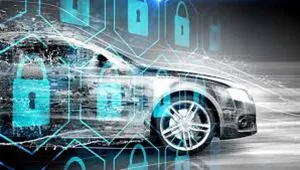
The emergence of connected and autonomous vehicles as more additional dimensions to the cybersecurity compliance question. Such vehicles incorporate interface data including GPS signals for navigation, traffic information and cloud based services. This entire interaction is a sequence of moments where every contact point is a risk factor. The matter is even worse as third-party applications and services are integrated into the system, thus may become a source of various threats. Consequently, the conventional notion of a cybersecurity perimeter is gradually transforming and a move from protecting each component to protecting the overall environment is initiated.
Rising Consumer Awareness
Another element in trends contributing to increases in the level of compliance of automotive cybersecurity is consumer awareness. Major famous attacks like the one that demonstrated in July 2015 how two hackers could take control of a Jeep Cherokee from the comfort of a Hollywood studio underscore the public’s concern on vehicle cybersecurity. Buyers do not expect only engines and pretty-looking car bodies anymore; they want guarantees that their cars are defenseless as well. Thus, this gradual increase in consumer expectations is putting pressure on automakers to consider cybersecurity as a good weapon in a competitive world.
Collaboration across the Industry
Collaboration has not taken a back seat all throughout this dynamic environment. Given the highly complex problem that automotive cybersecurity is, solutions need to be tackled by the entire industry. The Automotive Information Sharing and Analysis Center (Auto-ISAC) is a perfect example of the concept of collaboration programs in that it came into being as a result of joint efforts by a number of automotive companies. Auto-ISAC also assists stakeholders in protecting the use of automated systems by sharing threat intelligence and ideas for mitigating threats before they become threats. Just as it is with other industries, car makers have started entering into partnership with cybersecurity firms in order to utilize their knowledge to protect their cars.
Future Trends in Automotive Cybersecurity Compliance
Considering the further development of automotive cybersecurity compliance several factors are expected to play an important role. One of the trends visible in recent months and years is the growing connection between cybersecurity and functional safety. The differentiation between these domains is not clear because hacking is capable of having direct safety implications. This is leading to the use of systems that co-design and co-test the vehicles so that considerations on cybersecurity are implemented side by side with safety concerns.
Another new trend that can be mentioned as cybersecurity certification and labelling interest. As people have interest in rating vehicles for fuel efficiency and safety standards, there is increasing interest in setting out a standard for rating system security. Holders of such certifications could be presented with an easy-to-understand performance metric related to car cybersecurity and vice versa.
The Evolving Role of Governments and Regulators
Similar to countries’ authorities and regulatory agencies, the future is also uncertain. Despite current focused regulations are directed mainly at manufacturers, there is an alarming tendency to extend the control and monitoring. Informing could include such things as; the requirement with organizations to report any cyber security incidents, increased fines for any noncompliance, and possible rewards for compliance with best practices. Furthermore, with global outlook for the automotive industry intensification further and integration of technology in automobile production and operation, international unification of cybersecurity regulation will remain a critical factor due to risk of fragmentation.
Conclusion
It is undeniable that the journey toward strong automotive cybersecurity compliance is not easy and filled with numerous issues. However, it is also a chance for the industry to adapt to the new conditions and set a new direction for development. In embracing the proactive and collaborative approach, automakers can not only cover up for the regulations that come with autonomous vehicles but at the same time be ready to handle future shocks.
Meanwhile, the global compliance trends and patterns for automotive cybersecurity denote the driving forces of regulations, technologies and consumer expectation with strong influences on each other. This paper will emphasize on the need to protect cars of the future through developing effective methods of protecting them against cyber threats. The future will not be easy, it will necessitate a collective effort from all players in the society, but the benefits such as safety, trust, and value addition are sure to be Southampton’s worth the effort.
The question is no longer whether cybersecurity compliance is necessary but how the industry can rise to the challenge and lead the way in securing the future of mobility.
 Media Pack Download
 Newsletters
 Industrial Events