
The Ultimate Guide to General Electric Vehicles & Charging Solutions
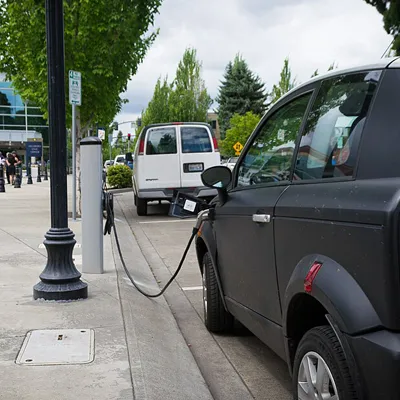
Living in a world that balances on the edge of greener, smarter, more sustainable transportation, electric vehicles (EVs) have now become an evolutionary reality and not a futuristic dream anymore. Whether you are a gearhead or an information junkie, electrified roads to come will turn out to be more promising than merely a reduction in emissions. The epicenter of this revolution is General Motors electric vehicles paired with the fastest-growing next-gen electric vehicle charging stations and the most advanced innovations in the EV charging management software. Why is the advent of this electrification wave so compelling? Now, let us look closely at the history of electric cars, their strengths, and where they are going.
The Rise of General Motors Electric Vehicles: A New Era
It is worth discussing the legacy of electric vehicles of General Motors. Global carmaker General Motors (GM) has redefined itself by establishing a new brand history through a concrete step towards electric mobility. Whether it is the Chevrolet Bolt EV, the upcoming Cadillac LYRIQ and HUMMER EV, General Motors EVs are staking their claim to become not only credible competitors but also industry standards in the world of EVs.
It did not all happen overnight. It is an outcome of concerted investments, infrastructure renewal, and big research in battery technology and intelligent charging solutions. Today, GM is striving to achieve the full-electric future, as it claims that it will launch over 30 new electric vehicles by 2035. But what do we compare to EVs now, with hybrids?
| Also Read: Electric Vehicle Charging Stations: Guide, Types & Trends |
Electric cars vs. Hybrid cars: the Decent Duel
The debate between electric vehicles vs. hybrid is rising with consumers making their purchasing decisions. Plug-in hybrid electric vehicles (PHEVs) strike a balance between more conventional combustion engines and full-on EVs; they are also not fully electric. On the other hand, there is the alternative of General Motors electric cars or other fully electric models, which provides a 100 percent battery energy solution.
The adaptability of plug-in hybrid electric vehicles is one of their advantages. They give the possibility of making shorter trips on electric-only and still having a long range with no need to be near the electric vehicle charging stations.
Nevertheless, full EVs prove to be an outstanding option in terms of cost savings in the long term, their eco-friendliness, and ease of integration with EV charge management software, especially with the help of smart grid systems.
Electric Vehicles Advantages That Go beyond the Obvious
Just what is so special about EVs? The list of the pros of electric vehicles is much longer than people can think. Yes, they do lessen tailpipe emissions, but this is not the only value.
General Motors electric vehicles have been known to be low maintenance because of the reduced amounts of moving parts, which often refers to the praise of the owners. Then there is the immediate torque delivery, stealthy acceleration, and excellent driving dynamics. EVs coupled with efficient charging management also allow the driver to charge at times when the grid is not under pressure and save money by taking advantage of off-peak.
What other underestimates? Installed with EV charging management software that, in addition to the location of the nearest charging stations for electric vehicles, also provides real-time information about the energy consumed, approximate costs, and carbon reduction. It is an interconnected ecosystem which has left its traditional cars outdated.
Evolution Electric Vehicles: A Timeline of Innovation
The development of electric cars is quite amazing. The history of this journey is one of persistence and invention, with aborted prototypes in the early 1800s, production but limited-run electric city cars in the 1990s, and, finally, today, performance-oriented, sleek-looking EVs.
As a case example, we have General Motors electric cars. The business unveiled its EV1 during the late 90s when EVs were not an everyday occurrence. It was brief, but it established what the current fleet is. Jump forward to 2025, and the Ultium platform by GM is already touted as a game changer - it has scalable battery architecture and is flexible in terms of vehicle type.
Such rapid progress also influences the improvements in charging stations of the electric vehicles; no longer slow and troublesome, they are now fast, smart, and ubiquitous.
The Fastest Charging Electric Vehicles: Who's Leading?
In the pursuit of convenience, the fastest charging electric vehicles are making headlines. Liquid-cooled supercharging and high powered DC fast chargers allow what used to take hours to be accomplished in minutes.
The General Motors electric vehicles, and in particular, the new Hummer EV, also have an 800-volt battery design and 350 kW fast charging capabilities, which are currently the fastest charging electric vehicles available in the market. Their inventions save on charging time significantly, as well as fuel the road-trip friendliness.
What is fueling this pace? Technologies such as liquid-cooled supercharging can be used to prevent overheating in a situation where quick transfer of energy is involved. It will also guarantee performance at a price with battery longevity when used along with intelligent charging management.
Market Insight: Charging Infrastructure Growth
We shall have a data lens look at the EV ecosystem. It demonstrates the fast worldwide growth of charges use by electric vehicles in the period between 2020 and 2025 as shown in the table below.
| Year | Public Charging Stations | DC Fast Chargers | Global EV Stock |
| 2020 | 1.3 million | 400,000 | 10 million |
| 2021 | 1.8 million | 550,000 | 14 million |
| 2022 | 2.4 million | 700,000 | 20 million |
| 2023 | 3.0 million | 900,000 | 30 million |
| 2024 | 3.8 million | 1.2 million | 42 million |
| 2025 (Est.) | 4.5 million | 1.5 million | 55 million |
The infrastructure of charging stations for electric vehicles has to grow with the number of these electric vehicles. It is here that the use of EV charging management software is required - to optimize energy distribution, station availability, and user experience.
Plug-In Hybrid Electric Vehicles: Still Relevant?
Plug-in hybrid electric vehicles are getting a lot of buzz next to full EVs, but should one consider them? Absolutely. They come in handy especially in areas where electric vehicles re-filling stations are in low supply or unreliable. Plug-in hybrid electric cars provide electric driving when commuting to work and gasoline on longer trips and that will be a flexible solution in this transitional period.
However, they will become obsolete when electric cars of the future will be cheaper to purchase and charging will be everywhere.
Smart Charging Management: The Brains behind the Charge
Smart charging management is one of the least covered but very important parts of the EV revolution. Getting your car plugged in is not the only thing anymore. It is about when, where and how you charge.
Smart charging also enables grid responsive charging so your EV charges when energy production is least costly and most environmentally friendly. It is an essential characteristic of a sophisticated EV charging management software that is currently being synced with mobile apps, smart home devices, and even energy grids, which utilities companies operate.
Just picture yourself programming your General Motors electric car to charge up at night when wind power is widely available and price is low. Or by employing EV charging management software to provide your resident charger to your neighbors as credit. Not only is this ingenious -it is revolutionary.
Electric Vehicles in the Future: Beyond Batteries
How will electric vehicles of the future be? Consider solid-state batteries, wireless chargers, and solar body panels and two-way charging so you’re EV can be used to charge your home during a blackout.
General Motors electric cars are also already experimenting vehicle to grid capabilities (V2G). This implies that your EV will have the ability to shuttle power to the grid at peak time-making cars into mobile power stations.
And as electric vehicles charging points develop to liquid cooled supercharging, we can expect faster and more efficient charging and a wider reach also in remote areas or off-grid.
Real-World Use Case: Fleet Electrification
There is an increasing shift in fleet operators towards EVs instead of diesel. Why? Due to the benefits of electric vehicles regarding cost per kilometer, maintenance, and environmental compliances, it is impossible to resist them.
Such fleets can plan charging, track usage in real time, and prevent peak-demand costs using EV charging management software. Such extent of smart charging control turns logistics into a data driven activity, as opposed to cost center.
There is a high demand of plug-in hybrid electric vehicles in long-distance trucking but the urban-based fleets are being switched to fully electric vehicles such as the electric vehicles of General Motors.
Final Thoughts: Is the World Ready?
We are living in a time, when the debate is no longer electric vehicles vs. hybrids but an all-electric one. The intense progress in smart charging management, liquid cooled supercharging, and EV charging management software are setting a scene in which the mass adoption can take place.
The fundamental problem is to create the confidence and develop infrastructure as well as to augment affordability. However, as the number of electric vehicles charging stations have already surmounted into millions and firms such as GM are at the forefront of the pack, the future appears no longer to be imminent but exciting.
Maybe you have wondered when it is the correct time to switch to electric, but now it is not someday anymore. As innovations continue to proceed at an increased pace and the options continue adding up, the future has become electrified, even faster, greener, and smarter than before.
 Media Pack Download
 Newsletters
 Industrial Events