
The Role of Collaborative Robots (Cobots) in Modern Automotive Manufacturing
The automotive manufacturing industry is about to undergo a transformative stage after several years of precision, speed, and innovation having been the main criteria synonymous with the industry. As the pressure to produce personalized automobiles in shorter intervals, decrease the costs of operations, and to enhance safety at the workplace, assembly lines are being reconsidered by manufacturers. Among the most disruptive changes that are engulfing the industry is the adoption of collaborative robots - usually referred to as cobots. That said, what exactly are cobots in automobile manufacturing doing to the next generation of the manufactories evolution? What is the reason behind the automotive manufacturing in auto industries automation that is closely gravitating towards human-robot collaborations in the automotive environment?
This article examines why collaborative robots are not a thing of the future but are currently in the present. Cobot enriching automotive assembly has become the lynchpin of the current robotic development in car-manufacturing because of the expansion of efficiency in production, safety and flexibilities of the workers.
Understanding the Rise of Cobots in Automotive Factories
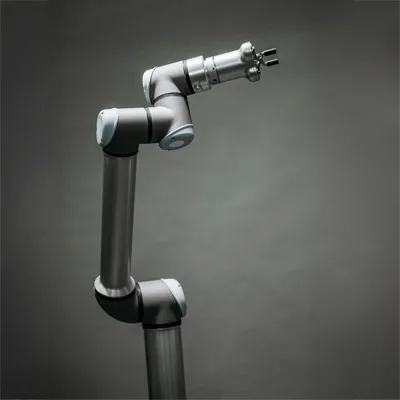
However, unlike its traditional industrial robot counterparts that have to operate in safety cage and need isolation between human operators and the robot, collaborative robots are planned to operate shoulder-to-shoulder with human colleagues. These are sensor-equipped nimble machines that are transforming the way production floors are run. Intelligent cobots for automotive industry Smart wheels can now be found sharing a workspace along with humans in many automotive factories because it can detect its environment, reacts to human intervention and can perform repetitive work in a pinpoint accurate manner. These developments are a powerful reflection of how robotics in automotive factories are being redesigned around agility and interaction.
The main difference between industrial cobots applied in line production of cars and conventional ones is adaptability. Such robots are fitted with safety devices like force-limiting sensor and AI-enabled vision systems which enable them to identify and avoid possible collision with other human workers. The combination of artificially intelligent machines and human oversight has made them quite invaluable at the international assembly lines. The adoption of industrial cobots for car production has given rise to safer, more responsive workspaces and revolutionized conventional factory norms.
Why Automotive Manufacturing Automation Needs Cobots
The ever-differentiated and elaborate car models have seen a tremendously high need to have flexible automation. The conventional robots are speedy and robust but they are mostly rigid and costly to convert to another task. Automobile production automation is involved with the automation systems that are able to keep up the pace with product modification rapidly.
That is where automotive manufacturing cobots excel. They are able to be relocated to do other jobs with little idle time. Automotive production is a bright example of customized cobot applications, as systems can be deployed to help install windshields, to tighten engine compartment bolts, and much more.
Moreover, the demographic change in most of the industrial nations involving the aging of the labor force and the decline in skilled labor contributes to demand to introduce the use of collaborative robots. In addition to relieving labor shortage, cobots assume the task that could present an ergonomic danger to the human worker, like regular picking or delicate assembly.
Cobots Improving Automotive Assembly: Real-World Examples
Even some of the global automotive giants such as Ford, BMW, and Volkswagen have already installed cobots in automotive manufacturing as the part of its automotive manufacturing automation strategy. Consider, the case of the Cologne plant of Ford in Germany. In this case, cobots have enhanced the production of automobile assembly and are assisting employees in assembling shock absorbers- a task that used to lead to injuries on the shoulder because it is physically heavy. The cobot will do the heavy work, therefore employees will do fine-tuning and alignment, which will enhance safety and quality.
In the same sense, Audi also uses industrial cobots on the production of cars in one of their body shops to assist technicians in welding and bonding. The task of working with hot and dangerous objects is carried out by these robots and workers do inspections of quality and correction, which is the embodiment of the spirit of human-robot interaction in automotive operations. These installations highlight how smart cobots for automotive industry can step into dangerous roles while improving consistency.
The Inquisitive Shift: Are Cobots Replacing Humans?
It is the opposite of the fear that robots will take over human jobs since collaborative robots are actually increasing the human jobs. Smart cobots automotive industry relieves the human workers of routine and dangerous roles so they can deal with less menial activities that add more value like inspecting, controlling quality, as well as programming.
In addition, businesses have received better employee satisfaction when they have their cobots in the automotive equipment industry. Employees not only have less physically strenuous jobs, but they are as well more intellectually involved and this is a win-win situation to both the employment and the management.
The real beauty of the modern robotics in the car production industry is that it does not substitute the intelligence and physical presence of man but supplements it. As we move forward, it’s increasingly clear that modern robotics in car manufacturing isn’t a story of man vs. machine - but of true partnership.
Automotive Production Cobot Applications: A Deep Dive
In order to truly grasp the range of the automotive manufacturing applications of cobots, one should classify them by both a role and working solution. The following table is illustrating the usage of collaborative robots at various levels of car manufacturing:
| Production Stage | Cobot Application | Human-Cobot Collaboration |
| Body-in-White Assembly | Spot welding, adhesive dispensing | Workers inspect welds, adjust seams |
| Paint Shop | Surface polishing, masking support | Cobots prep surfaces, humans handle aesthetics |
| Final Assembly | Seat and dashboard installation | Cobots lift, workers align and secure |
| Engine Assembly | Bolt tightening, component alignment | Cobots position, workers verify torque |
| Quality Inspection | Vision-based defect detection | Humans interpret results and recalibrate |
This table is to say that robotics in the automotive factories is not linked to the automation in per se, but the integration of complementary-like ecosystems between mechanical power and the human skill.
The Market Pulse: Cobots Are Here to Stay
In accordance with a report published recently by MarketsandMarkets, the collaborative robot market is currently valued at the USD 1.2 billion mark and is expected to reach an excess of the USD 10.5 billion mark by the year 2030 with a considerable proportion of the total invested in the automotive manufacturing automation industry. Such an explosive increase is pointing to a significant paradigm shift. It shows not only the feasibility of the use of cobot to enhance automotive accessories, but also the broadening of modern robotics in the production of cars as a strategic interest.
It is also interesting to note that OEMs (Original Equipment Manufacturers) and Tier-1 suppliers are stepping on the gas in smart cobots inside the automotive market due to changing needs of electric vehicles (EVs). Modularity of EVs serves as a perfect reason why EVs can be used in cobot-based workflows, particularly when precision and efficiency are paramount.
Human-Robot Collaboration in Automotive: Ethical and Safety Considerations
There are ethical questions which come into play when machines start to enter areas that were previously reserved to humans. What makes industrial cobots in car manufacturing safe, trusted and transparent to the manufacturers?
The solution to the problem is strict safety measures, achievements, and employee training. All collaborative robots should be in compliance with ISO/TS 15066 that sets safety requirement in human-robot collaboration within the automobile settings. Those in manufacturing are also investing in training to reskill workers to operate, maintain and program cobots.
The most important thing is transparency. Organizations can create an atmosphere of trust and innovation by engaging employees when deploying and ensuring to make them understand the value of using cobots in automotive manufacturing.
The Competitive Edge of Cobots in Automotive Factories
The advantages obtained by companies embracing automotive production cobot implementation are measuring up, less downtime, more flexibility in production, and higher quality of products. Such measures are essential in the hyper-competitive environment where consumer needs can change at a very fast rate, and supply chains are always pressed to stretch.
Collaborative robotics is not an innovation without reason why they are being sold as the missing link between the conventional labor-intensive manufacturing and the outbreak of the machine. The difference is closed by their combination of intelligence and adaptability.
Conclusion: Will Automotive Manufacturing Be Collaborative in the Future?
This is solid evidence. Robots showing off their skills on the factory floors of Detroit and the assembly lines in Tokyo, cobots are revolutionizing the automotive assembly, and they are no longer a niche practice but an industry standard. With continuing and increasing penetrations into the era of electric cars, sustainable production, and mass customization, the place of collaborative robots is only gaining momentum.
And tomorrow will be most successful in the automotive industry, those manufacturers who will see human-robot automotive collaboration as an evolution, instead of a disruption, as a chance to combine the best aspects of both worlds as, in actuality, the pursuit of greatness is humanity's greatest calling.
With modern robotics in the car manufacturing industry being used, the question to be asked is no longer, will cobots transform the industry? But instead, it should be thought of as, how far can cobots take us?
 Media Pack Download
 Newsletters
 Industrial Events