
Revolutionizing B2B Automotive: Unleashing the Power of 5G Connectivity
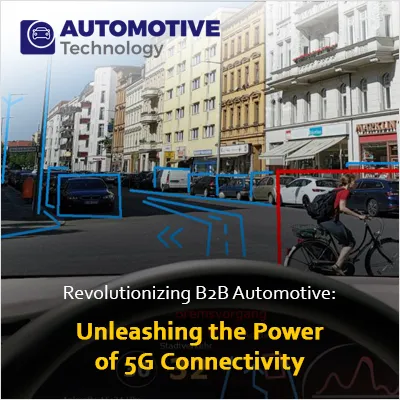
In the fast-paced world of B2B automotive applications, the integration of 5G connectivity represents a transformative leap forward. This article explores how the high-speed and low-latency capabilities of 5G are revolutionizing communication, safety, and efficiency for businesses operating automotive fleets.
Introduction:
The advent of 5G technology has ushered in a new era of connectivity, promising unprecedented speed and reliability. In the realm of B2B automotive applications, this translates to a host of opportunities for businesses to enhance their operations. From real-time data insights to improved safety systems, 5G is reshaping the way automotive fleets are managed and optimized.
1. Faster Data Transfer for Real Insights
The arrival of 5G technology marks the onset of a revolutionary era in connectivity, offering unparalleled speed and reliability. In the domain of B2B automotive applications, this signifies a myriad of opportunities for businesses to elevate their operations. Ranging from instantaneous data insights to enhanced safety systems, 5G is transforming the management and optimization of automotive fleets.
2. Low Latency for Enhanced Safety Systems
Low latency is a game-changer for safety systems in B2B automotive applications. The reduced time it takes for data to travel between devices is crucial for systems like collision avoidance and emergency braking, where split-second decisions can make a substantial difference. Real-time communication facilitated by 5G enhances safety by allowing vehicles to react instantly to potential hazards, ultimately preventing accidents and improving overall road safety.
| Also Read: Biometric Technologies in Automotive Security and Access Control |
3. Improved Navigation and Autonomous Driving
With 5G, navigation systems in B2B automotive applications can reach new heights. The high-speed connectivity enables more accurate and up-to-date mapping, essential for businesses relying on efficient and optimized routes. Additionally, the low latency of 5G is a boon for autonomous driving, allowing for faster and more reliable communication between vehicles and infrastructure, paving the way for the widespread adoption of autonomous technologies.
4. Remote Monitoring and Maintenance
The utilization of 5G provides substantial advantages to businesses managing automotive fleets through enhanced remote monitoring and maintenance capabilities. The effectiveness of real-time diagnostics and predictive maintenance is significantly heightened with the implementation of high-speed connectivity. This results in a reduction in downtime and the optimization of overall fleet efficiency. Adopting this proactive approach ensures that potential issues are identified and addressed before they escalate, leading to notable cost savings and increased operational uptime.
5. Enhanced Connectivity for In-Vehicle Systems
The improved connectivity within vehicles is another dimension of the 5G impact. Seamless integration of in-vehicle systems, such as advanced infotainment options, connectivity for mobile devices, and in-cabin monitoring, is made possible with 5G. This not only contributes to a better driver experience but also enhances overall productivity for businesses relying on automotive fleets.
6. Scalability and Future-Proofing
5G networks are designed with scalability in mind, allowing businesses to adapt to the growing demands of B2B automotive applications. Future-proofing operations become a reality as businesses embrace 5G, ensuring they stay at the forefront of technological advancements. The scalability of 5G networks also positions businesses for ongoing innovation, making it a strategic investment for long-term success in the automotive sector.
7. Edge Computing and Decentralized Processing
A frequently underestimated facet of 5G lies in its collaboration with edge computing. The amalgamation of high-speed connectivity and decentralized processing capabilities empowers B2B automotive applications to fully leverage real-time data. Edge computing facilitates data processing at the source, further minimizing latency and enabling the seamless operation of applications that require split-second decision-making, such as adaptive cruise control and predictive maintenance.
8. Advanced Analytics for Predictive Insights
The rapid data transfer capabilities of 5G introduce a realm of possibilities in advanced analytics. Businesses can capitalize on this feature to collect and analyze extensive real-time data from their automotive fleets. Predictive analytics models come to the forefront, forecasting potential issues and facilitating proactive maintenance, thereby optimizing operational workflows. Anticipating maintenance needs before they escalate not only minimizes downtime but also prolongs the lifespan of vehicles, culminating in substantial long-term cost savings.
9. Enhanced Supply Chain Integration
The impact of 5G extends beyond the vehicles themselves and permeates into supply chain operations. The technology facilitates more efficient and responsive supply chain management, enabling businesses to track the movement of automotive parts and components with unprecedented accuracy. This enhanced visibility contributes to streamlined logistics, reducing lead times and ensuring that businesses can maintain optimal inventory levels for their automotive operations.
10. Fostering Collaboration within a Connected Ecosystem through 5G
The real power of 5G manifests in its capacity to establish a seamlessly connected ecosystem where vehicles, infrastructure, and businesses collaborate seamlessly. Vehicle-to-everything (V2X) communication gains enhanced strength, enabling vehicles not only to communicate with each other but also to interact with traffic lights, road signs, and other intelligent infrastructure components. This interconnectedness cultivates a safer and more efficient driving environment, laying the groundwork for smart cities and future mobility solutions.
11. Energy Efficiency and Sustainability
5G's role in advancing energy efficiency should not be underestimated. As electric vehicles become increasingly prevalent in B2B fleets, the demand for energy-efficient solutions rises. 5G enables smarter energy management, optimizing charging schedules based on real-time data on electricity prices and grid conditions. This not only reduces operating costs for businesses but also contributes to a more sustainable and eco-friendly operation.
12. Training and Simulation for Driver Education
The high-speed, low-latency characteristics of 5G pave the way for innovative applications in driver education and training. Simulated training scenarios that closely mimic real-world driving conditions can be delivered in real time, enhancing the effectiveness of driver training programs. This not only contributes to improved safety but also ensures that drivers are well-equipped to handle the complexities of modern automotive technologies.
13. Regulatory Compliance and Data Security
As automotive operations become more data-intensive, compliance with regulatory standards and ensuring data security become paramount. 5G networks offer enhanced security features, including encryption and authentication protocols, safeguarding sensitive data transmitted between vehicles and backend systems. The ability to meet regulatory requirements and ensure data privacy is integral to the long-term success of B2B automotive applications.
14. Global Connectivity for International Operations
For businesses operating on a global scale, 5G provides a standardized and high-performance connectivity solution. The seamless integration of 5G ensures consistent and reliable communication across different regions, facilitating international operations for B2B automotive fleets. This global connectivity is crucial for businesses with diverse operations and supply chain networks spanning multiple countries.
Conclusion
In this comprehensive exploration of how 5G is impacting B2B automotive applications, we've delved into multiple dimensions that underline the transformative potential of this technology. From the integration of edge computing and advanced analytics to the seamless inclusion of supply chain processes and global connectivity, the latent capabilities of 5G are fundamentally reshaping the operations of businesses within the automotive sector. As the evolution of 5G technology unfolds, its influence is primed to expand even further, pushing the limits of what can be accomplished in the dynamic and ever-evolving landscape of B2B automotive applications. The journey with 5G has just begun, presenting businesses with a myriad of exciting possibilities as they prepare to embrace the future of connectivity.
 Media Pack Download
 Newsletters
 Industrial Events