
Plug-in Hybrid Vehicles: Benefits, Charging & Comparison
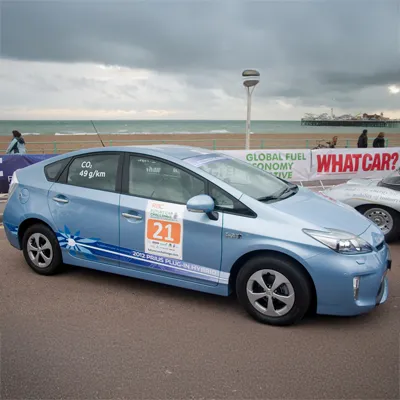
The automotive industry provides greener alternatives to the conventional cars, creating a paradigm shift as both the manufacturers and the customers begin to consider a new greener variant. One of such options, plug-in hybrid vehicles (PHEVs), is taking a niche by combining the benefits of driving capabilities of gasoline and electricity. Although the headlines are being taken by fully electric cars, the middle ground offered by PHEVs remains of interest to many industry pundits and consumers alike. In this article, we will explain the advantages of plug-in hybrid cars, compare them with other technologies, review the government incentives alongside plug-in hybrid cars, and look at the best plug-in hybrid cars 2025 that will revolutionize the industry.
Plug-in Hybrid vs. Electric Vehicles, which is smarter get?
The current plug-in hybrid vs electric vehicle debate is often based on the priorities of the consumer. EVs are said to have zero tailpipe emissions, but range anxiety and challenges of charging infrastructure continue to dog the minds of many consumers. On the other hand, the plug-in hybrid and electric vehicles differ in the sense that, PHEV has a reserve gasoline engine that may be utilized in long trips. This duality means that the consumers will not be bound to the charging stations, especially in areas where the infrastructure has not yet been built.
Interestingly, surveys tell that first-time EV buyers tend to compare plug-in hybrid vs electric cars before making a final decision. Full EVs could be adequate to urban residents who have a very short commute. In suburban or rural situations, however, PHEVs will be a trade-off between convenience and sustainability.
The Advantages of Plug-in Hybrid cars: so much more than meets the eye.
There are reasons other than lower emissions that will make plug-in hybrid cars worthwhile. These cars are made to suit the lifestyle of the modern world with huge amounts saved on fuel, and improved performance. Consumers state that they have better experiences with driving, as the electric and gasoline mode transitions are smoother.
The other important thing about the advantages of plug-in hybrid cars is that they can support different driving habits. PHEVs can function nearly fully in electric mode on short day-to-day journeys.
In the case of longer distances, the gasoline engine allows continuous movement. Unlike conventional hybrids, the plug-in system allows drivers to maximize the electric range through maintaining the fuel consumption to a minimum level according to the goal of sustainability.
Government Incentives for Plug-in Hybrids: A Catalyst for Adoption
Government incentives on plug-in hybrids are one of the biggest drivers of adoption. In North America, Europe and Asia, policymakers have acknowledged that these vehicles fill the gap between gasoline cars and fully electric cars. The US offers government subsidies on plug-in hybrids in the form of federal tax credits, state rebates, and lower registration fees. Likewise, European countries also offer subsidies, toll exemptions, and even free parking to owners of PHEVs.
Such plug-in incentives are not financial gifts which the government throws around; it is simply a strategic step to reduce carbon footprints without shutting the door to those consumers who may not be yet willing to go fully electric. The car sector hopes that these incentives will last until charging infrastructure is stronger.
Fuel Efficiency Guide for PHEVs: Unlocking Savings
PHEVs frequently offer consumers looking to find a fuel efficiency guide that these types of vehicles could perform well in the city and highway. Through the use of electric power that is applied during low speed commuting, fuel use is reduced. In a signatory manner, drivers who charge their PHEVs may often use gasoline on long routes.
PHEVs also have a fuel efficiency guide that highlights the aspect of driving habits. Effortless acceleration, regen, and full usage of the electric-only mode can result in a tremendous fuel efficiency. Even industry studies indicate that when properly employed PHEVs can reach miles-per-gallon-equivalent (MPGe) rates that are both competitive with, and possibly better than, most standard vehicles.
PHEV (Battery Charging): How to maximize the performance
The life and charge will improve when the batteries are charged properly. Experts give tips on battery charging PHEV that are critical to the owners. This can be done by charging it periodically after short journeys to ensure that the electric range is always available. Convenience Charging may be suggested to charge overnight using a standard Level 2 charger.
One of the most useful battery charging recommendations regarding PHEVs is to avoid deep discharges frequently. Maintaining the battery in an optimal range not only increases the life of the battery but also makes it as efficient as possible. Moreover, the drivers are encouraged to use smart charging applications to set their charging to be completed during the off-peak and reduce the price and decongest the grid.
Cost Comparison Plug-in Hybrid vs Gasoline Vehicles
A cost comparison plug-in hybrid vs gasoline requires consumers to consider more than initial costs. One of such options, plug-in hybrid vehicles (PHEVs), is taking a niche by combining the benefits of driving capabilities of gasoline and electricity.
Here’s a simplified breakdown:
| Factor | Plug-in Hybrid | Gasoline Vehicle |
| Purchase Price | Slightly higher | Lower upfront |
| Fuel Cost | Lower with charging | Higher due to gasoline reliance |
| Maintenance | Lower (fewer wear-and-tear parts) | Higher |
| Resale Value | Increasing steadily | Declining |
This cost-comparison plug-in hybrid vs gasoline table highlights the reason why so many green shoppers are drawn into hybrids despite their early reservations.
Maintenance Cost Plug-in Hybrids: Affordable Long-Term
As opposed to the common belief, the cost of maintenance plug-in hybrids is not much higher as compared to the traditional cars. Indeed, the use of less fuel due to the use of the combustion engine means that many PHEVs will need fewer oil changes. Regenerative brakes also decrease brake wear.
According to industry reports, the maintenance cost plug-in hybrids are usually less expensive than gasoline cars throughout the lifespan of the vehicle. However, the best thing is to carry out the periodic maintenance of the electric and mechanical parts. Manufacturers are also providing longer warranties on batteries which will eliminate the worry about replacement costs to consumers.
The best plug-in hybrids of 2025: A preview of the future
The next generation of the best plug-in hybrid cars 2025 will lead to an increased level of interest among consumers. Companies such as Toyota, BMW, Volvo, and Hyundai are spending droves of money on new PHEV models. The best plug-in hybrids 2025 will have longer electric ranges, a quicker charging profile, and smarter connectivity.
Indicatively, leaks in the industry posit that luxury auto makers will launch performance-based PHEVs that will have all-electric ranges of over 70 miles. At the same time, Toyota and Hyundai mass-market models will be affordable to families.
The best plug-in hybrid models 2025 will also indicate the improvements in not only the battery technology but also in the interior comfort, safety, and software.
Plug-in Hybrid Market Growth Forecast: Industry Outlook
The plug-in hybrid car market outlook is under close observation of the automotive industry, as the sales figures of the car globally are steadily increasing. According to analyses, PHEVs will take up a niche segment in the coming ten years, especially in areas that have sluggish EV infrastructure.
Based on the latest research, the plug-in hybrid market expansion indicates that the market will increase by more than 7% per year 2025-2030. Europe has remained the most robust market, then Asia-Pacific, and North America is catching up as more people are becoming aware of the benefits of being environmentally friendly. However, this plug-in hybrid growth projection shows that the PHEVs are not a flash-in-the-pan transition technology but a major part of the green mobility ecosystem.
The Bigger Picture: Plug-in Hybrids as the Sustainability Journey
The strategic value of PHEVs in the shift to net-zero emissions may be explained based on the situation in the larger automotive industry. Despite the adoption of EVs, the thing is that millions of drivers are still unwilling to adopt it. In this case, the advantages of plug-in hybrid vehicles along with the enabling policies such as government subsidies on plug-in hybrids provide a compromise that hastens transition.
And whether it is plug-in hybrid vs. electric vehicle, the simple rule of thumb with respect to having a fuel efficiency guide covering plug-in hybrids, or searching into the affordability of keeping a plug-in hybrid, the solution is generally a versatile, practical and environment-friendly one.
Final Thoughts
The road to sustainable mobility does not exist everywhere. PHEVs are a compromise between normal and fully electric automobiles that provide the flexibility without sacrifice of sustainability. With the market of top plug-in hybrid models 2025 on the market, and with the high data on plug-in hybrid market growth forecast and government incentive of plug-in hybrids, the demand rate is set to increase even more.
In many cases, the choice of the consumer is reduced to a close cost / plug-in hybrid vs gasoline, and lifestyle factors.
However, using the correct battery charging tips on PHEVs and understanding the long-term maintenance cost plug-in hybrids, they might indeed be the very best of both worlds.
 Media Pack Download
 Newsletters
 Industrial Events