
Press Tools: Pioneering Precision in the Automotive Industry
Introduction to Press Tools in the Automotive Industry
Press tools are essential components in the automotive manufacturing process, driving precision, efficiency, and innovation. These tools are used to shape, cut, and form metal sheets into various parts and components that make up a vehicle. As the automotive industry advances, the role of press tools becomes increasingly critical, ensuring that manufacturers meet the high standards of quality, safety, and performance demanded by consumers and regulators alike.
Evolution of Press Tools in Automotive Manufacturing
The evolution of press tools in automotive manufacturing has been marked by significant technological advancements. Early press tools were simple and manually operated, limiting their precision and efficiency. With the advent of industrial automation and computer-aided design (CAD), press tools have become highly sophisticated, enabling manufacturers to achieve unprecedented levels of accuracy and consistency in the production of automotive components.
Types of Press Tools Used in the Automotive Industry
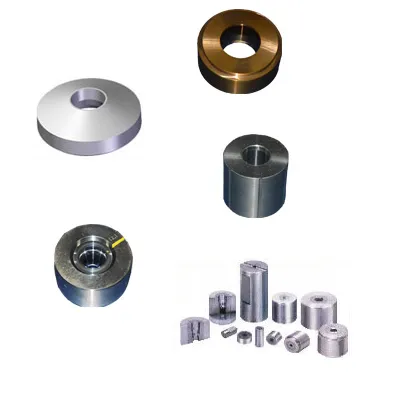
There are several types of press tools used in the automotive industry, each designed for specific applications. These include blanking tools, bending tools, punching tools, drawing tools, and forming tools. Blanking tools are used to cut flat shapes from metal sheets, while bending tools are used to bend these shapes into desired angles. Punching tools create holes or shapes in the metal, drawing tools stretch the metal into complex shapes, and forming tools shape the metal into three-dimensional components.
Materials Used in Press Tool Manufacturing
The materials used in press tool manufacturing are critical to their performance and durability. High-speed steel (HSS) and carbide are commonly used due to their hardness, toughness, and resistance to wear. Additionally, advanced materials like tungsten carbide and powdered metallurgy are being explored to enhance the lifespan and efficiency of press tools. The choice of material depends on the specific application and the type of metal being processed.
Design and Engineering of Press Tools
The design and engineering of press tools require a deep understanding of material properties, manufacturing processes, and product requirements. Engineers use advanced CAD software to create precise designs, simulate manufacturing processes, and optimize tool performance. Finite element analysis (FEA) is often employed to predict the behavior of the tool under various conditions, ensuring that it can withstand the stresses and strains of high-volume production.
Role of Press Tools in Automotive Component Manufacturing
Press tools play a pivotal role in the manufacturing of various automotive components, including body panels, chassis parts, engine components, and interior parts. The precision and efficiency of press tools ensure that these components meet strict quality standards and fit together seamlessly during assembly. This not only enhances the overall quality of the vehicle but also contributes to its safety and performance.
Innovations in Press Tool Technology
Recent innovations in press tool technology are transforming the automotive manufacturing landscape. High-speed stamping presses, servo-driven presses, and progressive die systems are some of the advancements that are increasing productivity and precision. These technologies enable faster production cycles, reduce material waste, and improve the consistency of the final product. Additionally, the integration of sensors and IoT technologies in press tools allows for real-time monitoring and predictive maintenance, further enhancing efficiency and reliability.
Impact of Automation on Press Tool Operations
Automation has a profound impact on press tool operations in the automotive industry. Automated press lines, equipped with robotic arms and automated material handling systems, streamline the production process and reduce the need for manual intervention. This not only improves efficiency but also minimizes the risk of errors and enhances workplace safety. The use of artificial intelligence (AI) and machine learning algorithms in automation systems enables continuous optimization of press tool operations, leading to higher productivity and quality.
Challenges in Press Tool Manufacturing and Maintenance
Despite the advancements in press tool technology, manufacturers face several challenges in the production and maintenance of these tools. High initial costs, complex design requirements, and the need for skilled labor are some of the obstacles that manufacturers must overcome. Additionally, the maintenance of press tools is crucial to ensure their longevity and performance. Regular inspection, lubrication, and timely replacement of worn-out parts are essential to prevent downtime and costly repairs.
Future Trends in Press Tool Technology
The future of press tool technology in the automotive industry is likely to be shaped by several emerging trends. The adoption of additive manufacturing (3D printing) for the production of complex tool components is expected to reduce lead times and costs. The development of new materials with superior properties will further enhance the performance and durability of press tools. Moreover, the integration of advanced data analytics and AI in press tool design and operation will enable predictive maintenance and continuous improvement, driving further advancements in precision and efficiency.
Conclusion: The Vital Role of Press Tools in Automotive Precision
Press tools are indispensable to the automotive industry, driving precision, efficiency, and innovation in the manufacturing process. As the industry continues to evolve, the role of press tools will become even more critical in meeting the high standards of quality, safety, and performance required by modern vehicles. Through continuous advancements in technology, materials, and automation, press tools will continue to pioneer precision in automotive manufacturing, ensuring that manufacturers can keep pace with the demands of the future.
 Media Pack Download
 Newsletters
 Industrial Events