
How Regenerative Braking Works in Electric Vehicles
The car sector is undergoing an incredible revolution. Electric vehicles (EVs) are transforming the concept of mobility, starting with gasoline engines and moving to the use of batteries as the power source. Regenerative braking is one of the most intriguing inventions in electric vehicles that has become one of the most popular innovations among the numerous ones. It is not only a braking mechanism, but also a technology that recovers wasted energy, enhances driving range, and redefines the driving experience. However, what is it, and why is it so imperative to the EV revolution?
The Science behind Regenerative Braking
Simply put, the concept of regenerative braking in electric cars makes the wheels look like mini power plants. We must first remember the principles of motion to know how regenerative braking functions. Each time a car is moving, it has kinetic energy. In conventional cars, it is converted into heat, which is released into the atmosphere.
In EVs, things are different. The EV's generative braking mechanism comes into effect when the driver withdraws their foot from the accelerator. It works in reverse, where the motor utilizes the energy instead of the friction-based brakes. It switches to generator mode, transforming the movement of the vehicle into electricity. This electricity does not disappear, but it is delivered back into the battery and helps to recover electric vehicle energy.
It is in this sense that braking no longer terminates the flow of energy but the continuation of the same. The vehicle is basically a recycling-power vehicle that recycles power each time it decelerates.
| Also Read: Safety and Performance Advantages of Brake-by-Wire Systems |
Components of an EV Regenerative Braking System
To know how regenerative braking works, we will have to take a glance at its components. The regenerative braking system in EV incorporates the motor controllers and inverters together with the battery management system. All of them contribute to the easy change of acceleration and braking.
The regenerative setup is software-controlled, unlike traditional systems of braking. Some sensors are used to measure the speed of the wheels, throttle position, and the state of charge of the battery. This enables the system to determine the degree of energy that is recoverable during deceleration. Excessive recovery may overcharge the battery, and too little would be a waste of potential energy.
The EV braking technology offers the maximum regenerative braking efficiency and is safe by ensuring the balance of these factors.
One-Pedal Driving in EVs
Many discussions have been made about one-pedal driving in EVs because of the regenerative braking feature. This enables the driving process to be easier and futuristic. The driver does not need to alternate between the accelerator and the braking pedal; he uses one pedal to accelerate and decelerate at the same time.
As the foot is pressed on the accelerator, the vehicle is made to move forward. When the pedal is released, the EV regenerative braking system activates and decelerates the car and provides energy to the battery. People who drive EVs often report that driving with one pedal feels like the car is an extension of them after some practice, which has formed a perfect interface between the human and the machine.
Through the change in the driving style, there is also a focus on the fact that EV braking technology is not only about functionality but also about the ability to transform the entire experience of being at the helm.
The Benefits of Regenerative Braking
The advantages of the regenerative braking far outweigh the extended range. Yes, the direct benefit is in the fact that EVs could reclaim a part of the energy they consumed, which improves the number of miles per charge. But there's more.
First, it is a huge plus since it will lower the amount of wear and tear on the mechanical brake components. The deceleration is performed by the EV regenerative braking system, which means that the brakes are less often used. This results in an extended life span of brake pads, reduced maintenance expenses, and a longer vehicle lifespan.
Secondly, there is the impact on the environment that cannot be ignored. EVs are even more sustainable because, through electric vehicle energy recovery, a smaller amount of energy is wasted. This fits well with the world objectives of cutting carbon emissions and maximizing the use of renewable energy.
Finally, as a driver, the application of regenerative braking has other advantages like better rides, higher safety in traffic, and better control in downhill driving.
Regenerative Braking Efficiency: How Much Can Be Recovered?
The main question that creates a lot of concern is: how efficient is this system? The studies have shown that regenerative braking is able to take up a range of 10 to 70 percent of the lost kinetic energy during braking under driving conditions.
As an example, in the case of city driving, where the car has to stop and start frequently, it is possible to achieve maximum kinetic energy recovery in the EVs. Highways, where the constant speeds are long, offer fewer recovery opportunities.
A basic comparison of the potential of recovery is illustrated in the chart below:
| Driving Condition | Energy Recovery Potential | Contribution to Battery Range |
| City Traffic | High (up to 70%) | Extends range significantly |
| Mixed Driving | Moderate (30-50%) | Balanced impact |
| Highway Driving | Low (10-20%) | Minimal but still useful |
This efficiency is among the most crucial factors of the electric vehicle energy recovery and demonstrates the reasons why EV braking technology is not a mere gimmick but a necessity.
How Regenerative Braking Works with Battery Charging
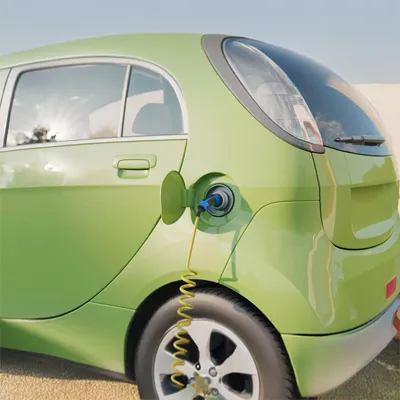
The interesting thing about the operation of regenerative braking is its application to charge the battery of electric vehicles. Whenever the driver brakes off, little electricity is delivered to the battery pack. Although this is not a substitute for traditional charging via wall sockets or fast chargers, it serves as an added source of power.
This can be a significant improvement when there is a long commute into the city. You can imagine that you are driving in a traffic-laden city and you are forced to stop at the red lights after every few minutes. The power is incremented back to the battery at each stop. When driving more than one day, battery charging of electric vehicles through regenerative braking can increase the range by some kilometers.
Therefore, the system not only contributes to the performance of the car but also gives it peace of mind, especially in cases where there are limited charging stations.
The Industry Perspective on EV Braking Technology
The EV braking technology has been rapidly adopted among automakers. Regenerative braking in electric vehicles has been among the trademarks of Tesla, Nissan, Hyundai, and BMW. Even one-pedal driving in Tesla EVs became a brand experience.
From an industry perspective, the mechanism of regenerative braking is undergoing further improvements in better battery chemistries, more intelligent control software, and intelligent recovery systems. Other models have enabled drivers to set the degree of regeneration and tailor the experience to their own comfort level.
Market analysts further project that the more efficient kinetic energy recovery in EVs is achieved, which is related to the reduction in size of the EV batteries. Lighter cars, lower cost of materials, and cheaper EVs to consumers are attributed to smaller batteries.
Challenges in Regenerative Braking Systems
The EV regenerative braking system, in spite of the numerous benefits it has, does not lack challenges. The chemistry of the battery is of critical importance because no matter how powerful a lithium-ion battery is, it can only absorb the charge at a certain rate. When the regenerative braking generates a larger amount of current than the battery can absorb, it could cause inefficiencies or energy wastage.
Learning curve by drivers is another problem. Although the concept of one-pedal driving in EVs is intuitive to some, others experience it as sudden or uncomfortable at first. Balanced aggressive regeneration and smooth deceleration should be reached by automakers in order to make it widely acceptable.
Also, when it is icy or wet, the motor-based deceleration may decrease traction unless properly controlled. This is why modern EVs incorporate the new braking systems with the old hydraulic braking systems.
The Future of Regenerative Braking in Electric Vehicles
In the future, it can be expected that the advantages of regenerative braking can only increase due to the development of solid-state batteries, supercapacitors, and artificial intelligence-based energy management systems. EVs of the future can have almost 100 percent recharge of their braking power, and virtually any motion can be used to restore the energy to the electric vehicle.
The idea may even go further than road vehicles. EVs and kinetic energy recovery are already being experimented with in trains, bicycles, and industrial machines. Consider a whole transportation ecosystem in which every stop and deceleration is converted into electricity that is input into the grid.
Not only would this development revolutionize the way in which electric vehicles are charged, but the same development would have the potential to redefine the way in which we store and share energy within smart cities.
Conclusion: More than Just Brakes
Finally, regenerative braking on electric vehicles is not only a technical detail, but rather it is the representation of efficiency, sustainability, and innovation. We learn the working principle of regenerative braking, and thus we are grateful, at least, that every deceleration is part of the movement, that every halt is a provision for the travel in advance.
The EV regenerative braking system proves that mobility advancement is not necessarily related to speed or power. At other times, it may be a question of getting the best out of what is available. Regenerative braking is the solution to one-pedal driving in EVs and better battery charging of electric vehicles; the best thing is that nothing goes to waste.
With the industry competing to become greener by offering transportation, EV braking technology has become an indication that even braking down can propel us.
 Media Pack Download
 Newsletters
 Industrial Events