


Chip Scares Expose Assembly Lines That Run on Tight FTL Schedules
Spend an hour on the floor of a modern car plant and what stands out is how empty it is. Each station holds maybe a few hours of parts, sometimes less.
Lean production pushed inventory out of the building years ago, and what replaced it was a schedule so tight a late truck handling FTL services can stop a line faster than a broken machine can.
Plant managers know the risk and accept it anyway. Holding parts costs money every quarter. A late delivery only hurts on the bad days, and most days aren’t bad.
A Part Worth Less Than a Postage Stamp
Many of the chips behind recent shortages are basic parts that sell for pennies. That’s the problem. They sit inside components nobody pays much attention to, like the module that runs a power window or the sensor on a brake, and the supplier can’t ship that module until the chip is on the board.
The fall 2025 chip crisis showed how thin that buffer can be: in an October 2025 statement, the European Automobile Manufacturers' Association warned that Nexperia could no longer guarantee chip deliveries, that existing stocks would last only a few weeks, and that qualifying replacement suppliers could take several months. Weeks of stock, months to replace the source. Overtime doesn’t close a gap like that.
What a Tight Schedule Actually Costs
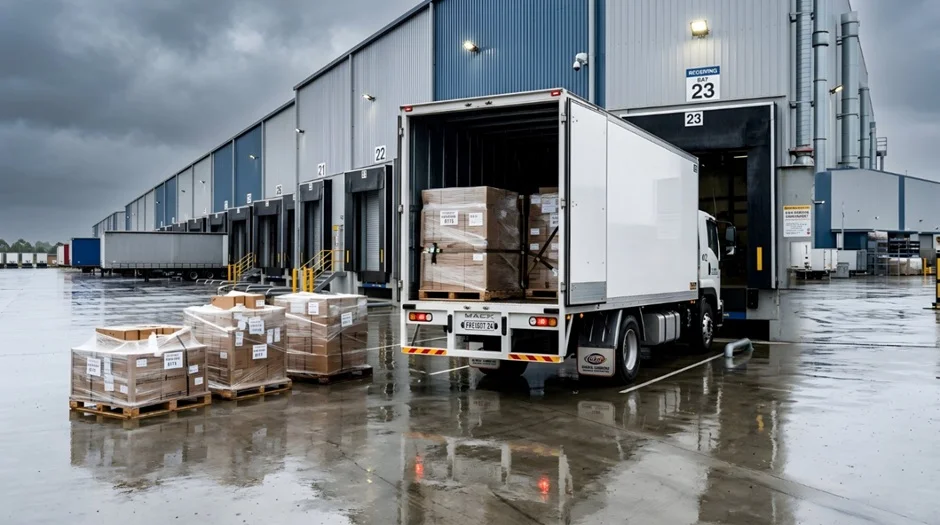
Trucks still bring almost everything in. The FTL services that supply an assembly plant work to dock appointments set in minutes, each tied to that shift’s build plan. If a trailer shows up four hours late, it hardly matters that the parts inside are correct. By then, the line needs something else.
That system isn’t careless. Suppliers send an advance shipping notice for each pallet. Dock crews stage incoming freight against the build order. Carriers are scored mostly on whether they made the window, and price comes second. A random truck off the load board doesn’t help much there. A dedicated FTL trailer carries one customer’s freight from pickup to delivery, with no extra stops or consolidation dock, so the plant can plan labor around it.
A shortage makes all of this harder because the freight itself starts changing. Replacement parts come from suppliers the plant has never worked with. Modules due next week get pulled into this week. A load that normally runs on a routine lane suddenly has to be at the dock on Tuesday at 6 a.m. Shippers who picked carriers mainly on price usually find out on those mornings what the savings were worth.
Fewer Parts Inside, More Pressure Outside
Taking inventory off the plant floor doesn’t make it disappear. A lot of it just moves into trailers on the interstate, somewhere between a supplier and a receiving dock. The trucking network ends up holding risk that used to sit on racks inside the building. Usually nobody notices. When it fails, the plant reports a production stoppage, even though the cause was a truck or a supplier three states away.
Manufacturers aren’t going to bring back six weeks of stock, and they shouldn’t. But lean production has a logistics side, and it needs as much care as the plant side does. That means picking carriers for their on-time record and for how quickly they speak up when something slips. Seen that way, FTL services are part of the production schedule, and plants that plan freight with the same care tend to keep running when a cheap chip somewhere upstream stops showing up.
 Media Pack Download
 Newsletters
 Industrial Events



Author Bio:

Natalya Vlasova
Natalya Vlasova is a professional content marketer with more than 10 years of experience in the content marketing field. She specializes in working with clients in Europe and the United States. Additionally, she has over four years of experience in logistics research and in the development of content for the tracking industry.

