

Accelerating Innovation: Rapid & 3D Prototyping Services for the Automotive Industry
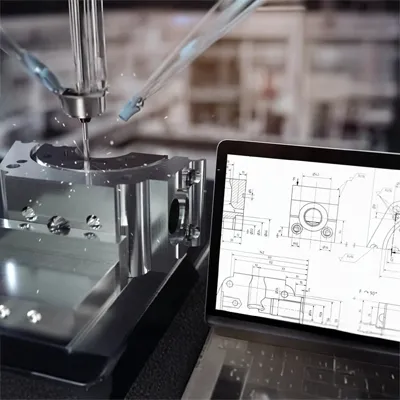
The auto industry is in the midst of one of the most fundamental changes in the historical context. The pressure to innovate faster without losing quality or safety is the constant demand of consumers, growing regulatory frameworks, electrification, autonomous technologies, and the necessity to launch new products faster, thus forcing manufacturers to work on innovations as swiftly as possible. Rapid prototyping and 3D prototyping services have become two important drivers of innovation in this environment. Such technologies are redefining the way automotive parts are developed, tested, validated and refined, and decreasing development times by a significant margin and cutting costs.
Rapid and 3D prototyping are no longer considered as nice-to-have features, whether with concept cars and functional components or tooling and customized parts. They have become important tools that enable automotive OEMs and suppliers to be competitive in a very dynamic market.
The Evolution of Prototyping in Automotive Manufacturing
Conventional automotive prototyping was a process that was relying much on machining, casting and processes that were processes that consumed tools. As good as they were, these were time consuming, costly and rigid. Design iterations would be slow and slow innovations because it would take weeks or months to come up with a single prototype.
Rapid prototyping was introduced and this was a major change. The initial methods saw designers shift between digital models into physical components much sooner and made possible early-stage testing and visualization. Additive manufacturing technologies were developing and eventually became more accurate, flexible, and able to generate working parts and not merely aesthetic models.
Today, 3D prototyping serves up high-end services that range into low-volume production, and all the way down to validation of the initial concept. This has revolutionized the development of automotive products in the way that it has made experimentation more expeditious, inexpensive and more information-based.
Understanding Rapid and 3D Prototyping Services
Rapid prototyping has a name given to a number of manufacturing methods, which very fast create real objects based on a CAD file, using various materials, including plastics, resins, metals, and composites (3D prototyping, most commonly identified with additive manufacturing).
Prototyping services in the modern world are more than mere model building. They provide optimization of design, choice of materials, support in terms of simulation, and post-processing. Car manufacturers can now leave highly specialized work of prototyping to service providers who have industrial grade printers, sophisticated software, and knowledgeable engineers.
This service-based model enables companies to expand their prototyping but without investing heavily in an in-house system allowing it to be fast, accurate, and confidential.
Speeding Up Automotive Design Cycles
The shortening of the time to develop is reduced exponentially in one of the greatest benefits of rapid and 3D prototyping. Traditional design cycles in the automotive industry consisted of time-consuming feedback between the design, engineering and manufacturing departments. Any design error that is identified at the late stage may create expensive delays.
Under rapid prototyping, engineers are able to make physical components to be tested in just days or sometimes even hours. This allows quicker design validation, real time feedback and quicker iterating. Various design solutions can be tested concurrently thus enabling teams to make comparisons of performance, aesthetics and ergonomics under conditions of actual use.
This rapid design creation is especially useful in a business where time-to-market is a key determinant of business success. Rapid prototyping translates into fast decision making and product launch.
Enhancing Design Accuracy and Functional Testing
The current automotive prototyping is not restricted to visual prototyping. Modern 3D prototyping services are now providing high-quality functional prototypes, very accurate, and almost the same as the actual production parts. Such prototypes are capable of withstanding mechanical stress, thermal exposure and chemical interaction that is why they are apt to be intensively tested.
Functional prototypes enable the engineers to test the form, fit and function early. Air ducts, housings, brackets, interior panel, and under-the-hood parts are among the components that can be tested in real world performance before the company commits itself to mass production.
Such accuracy decreases the probability of design flops, rework is minimized and the overall reliability of the product is enhanced. It also fits the safety and regulatory standards in that it helps recognize issues that may arise in the development process at an early stage.
Supporting Light weighting and Material Innovation
The concept of light weighting is one of the most important concerns of automotive manufacturers who want to increase the fuel efficiency of their vehicles, increase the range of electric cars, and decrease emissions. The prototyping (rapid and 3D) is important in assisting the lightweight design strategies.
Additive manufacturing also allows an engineer to create complex geometries that are impossible to create or not cost effective to create via other methods of manufacturing. Lattice structures and internal channels which are topology optimized can assist in reducing the use of materials but still achieve structural integrity.
The prototyping services also permit the use of new high-performance material like high-performance polymers, metal alloys and blends of composite. Automotive teams are able to easily test the performance of various materials under real operating environments, which assists in the proper choice of materials and innovation.
Enabling Customization and Low-Volume Production
Consumer preference of personalization and niche automobiles is increasing. Rapid prototyping is economical in the development of customized components since there are no high tooling costs as in traditional manufacturing.
Low-volume production of specialized parts, interior trims, concept vehicle components, and aftermarket accessories are being produced using 3D prototyping services. Such flexibility is especially useful in high-end brands, motorsport, and start-up startups of electric vehicles, which demand flexibility and tailoring.
Additive manufacturing helps manufacturers to address the needs of the market and its trends at a very fast pace by eliminating the distance between the prototype and the actual production.
Reducing Development Costs and Financial Risk
The development of automotive products is associated with a high cost of money and any mistake in design is very costly when realized too late. This risk can be reduced with the help of rapid prototyping that allows early validation and refinement.
Manufacturers can save costs by avoiding the tooling of identification of design flaws at the prototype stage and delays caused by tooling also avoids delays in production. Better design choices and cheaper finished products are the result of the possibility to test multiple iterations at a comparatively low cost.
Prototyping services that are outsourced also cut down on capital outlay since the company does not require any equipment, maintenance, or special personnel. This affordability has allowed innovative prototyping to not only be available to large OEMs but also to Tier 1 and Tier 2 vendors and new automotive start-ups.
Improving Collaboration across Automotive Teams
The design, engineering, suppliers and manufacturing departments work together in cross-functional teams in auto product development. One of the common grounds which are utilized to make the communication between these stakeholders more effective and aligned is the use of physical prototypes.
The services of 3D prototyping allow the teams to possess the physical models very early in their development process and it becomes easy to give feedbacks regarding the product and agree on the same. The stakeholders can easily approach a physical aspect of the design rather than online illustrations so as to make the design reviews more meaningful.
This enhanced teamwork reduces the instances of misunderstandings, reduces the approval processes and results in a more unified and well integrated design of vehicles.
Driving Innovation in Electric and Autonomous Vehicles
Novel design challenges and opportunities have been established as a result of the trend of electric and autonomous cars. Examples of aspect needing innovative solutions that trade performance, safety and efficiency include battery systems, power electronics, lightweight structures and sensor housings.
The emerging technologies are highly compatible with rapid and 3D prototyping. The new enclosure design thermal management, structural components optimization to protect battery, and sensor mount prototype can be quickly tested by engineers.
With the continued high rates of change in electric and autonomous platforms, having the capacity to iterate speedily and design-check in an early stage will be a strategic benefit. The prototyping services allow the manufacturers to cope with the change in technology as they address the complexity.
Integrating Prototyping with Digital Manufacturing Ecosystems
The contemporary car creation becomes more based on digital technologies, including CAD, simulation, and digital twins. Rapid prototyping becomes a part of this digital ecosystem allowing seamless transition between the virtual design and physical testing.
Additive manufacturing is often used together with a simulation-based design optimization in advanced prototyping services. Such integration enables the engineers to make predictions of a performance that can be tested in the real world and thus the loop between the digital and real world development is closed.
With the further development of Industry 4.0 and smart manufacturing, the rapid prototyping will become even more central to the production system of agile and data-driven automobiles.
The Future of Rapid and 3D Prototyping in Automotive
Automotive prototyping is directly connected to the development of materials, printing technology, and automation in the future. More material properties, bigger volumes of the build, and faster printers will enhance the automotive applications.
More hybrid manufacturing methods involving the integration of additive and traditional methods will emerge in the future and the line between prototyping and production will become increasingly indistinct. Sustainability will also affect the prototyping, as more recyclable materials will be used, and there will be less waste.
With the ever increasing competition and shorter innovation cycles, fast and 3D prototyping services will remain an integral part of the automotive development strategies.
Conclusion
The 3D prototyping and rapid prototyping has seriously changed the manner in which the automotive industry is becoming innovative. These technologies can help manufacturers adapt rapidly to the market demands and technological changes because they improve the speed of design cycles, increase functional testing, lower costs, and customization.
The capacity to swiftly and confidently transfer the idea to reality in a constantly changing industry is crucial. With automotive manufacturers consistently raising the bar of vehicle design, performance and sustainability, high speed and 3D prototyping will be a source of innovation and competitive edge.
 Media Pack Download
 Newsletters
 Industrial Events